 Signify.ink

Most business cards end up in a drawer. They are printed with a job title that changes, a phone number that gets replaced, and a company logo that gets redesigned — and none of those updates ever reach the people who saved the card. Signify.ink was built to fix that. It is a digital business card platform that replaces the paper card with a live, always-current professional profile that can be shared by QR code, NFC tap, or a simple link. This is the story of how it was built, where it came from, and why it matters.
Signify is not a networking infrastructure company, and it is not affiliated with the lighting brand of the same name. It is a product of Consac, a group with Norwegian roots, an engineering hub in Kolkata, India, and global operations in the United States. The platform was designed in India, is operated globally, and is used by professionals and teams who want their professional identity to stay current without reprinting anything. If you want the product overview first, the Signify digital business card page is the best place to start.
The problem with paper cards
A paper business card is a snapshot. It captures a name, a title, a phone number, and an email address on the day it is printed. If any of those details change — a promotion, a new company, a different phone number — the card becomes inaccurate, and the person who saved it has no way of knowing. The card sits in a wallet or a drawer, slowly going out of date, until it is eventually thrown away.
This is not just an inconvenience. It is a structural problem with how professional identity is shared. The modern professional changes roles more frequently than a printed card can keep up with, and the people they meet need a way to stay connected that does not depend on a static document. The virtual business card solves that by making the card a living profile: when you update your details, everyone who has your card sees the change.
What Signify actually does
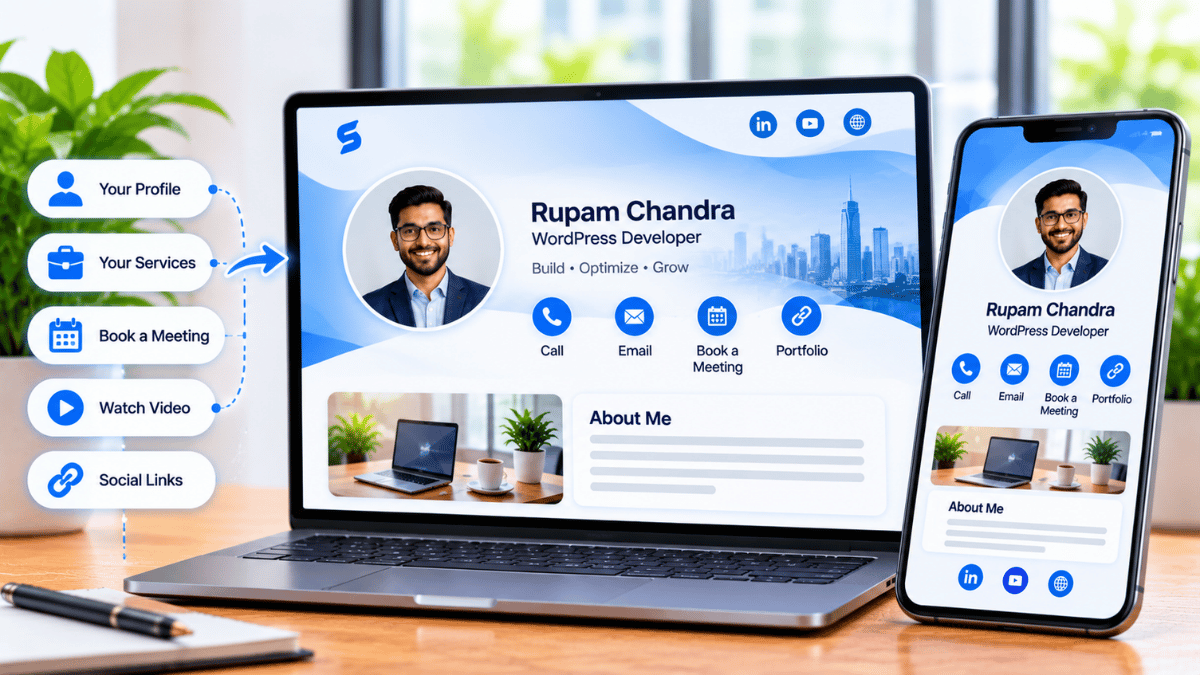
Signify replaces the paper card with a digital profile. You create a card with your photo, role, company, contact details, website, social links, and any other professional links you want to share. You can customise the design, choose a theme, and add a cover image or logo. The card is then shared through one of three primary modes: a dynamic QR code, an NFC tap, or a direct link. Recipients open the card in a browser, save the contact as a VCF file, and never need to download an app.
The platform is designed for individuals and for teams. Individuals can start on the free tier and upgrade to a paid plan for additional themes and visibility controls. Teams can use Signify Teams to manage cards centrally, enforce brand consistency, and track engagement through shared analytics. The pricing page covers the difference between the free, Professional, and Teams plans.
The QR code itself follows the international standard ISO/IEC 18004:2024, which defines the encoding and error correction that make the code scannable across devices. That standardisation is why a recipient’s phone camera can open a Signify card without a special app or a compatibility issue.
The Consac foundation: Norway, India, USA
Signify is operated by Consac, a group with three entities that together cover strategy, engineering, and global operations.
Consac AS — Norway
The parent company is based in Lillestrøm, Norway. Consac AS provides strategic oversight and compliance leadership for Signify’s European operations, including GDPR and ePrivacy compliance, strategic technology planning, and regional partnership development. The Norwegian entity is the governance layer that ensures the platform meets European data protection standards — a critical requirement for any product that handles professional contact information.
Consac Engineering Private Limited — India
The engineering hub is in Sector V, Salt Lake, Kolkata. This is where the core platform is built: architecture, security, UX/UI design, scalable infrastructure management, and R&D. The Indian team is responsible for the product that users interact with — the card editor, the sharing flow, the analytics dashboard, and the integrations with CRM systems like Zoho. If you have used Signify, the engineering behind it was built in Kolkata.
Consac LLC — USA
Global operations are based in Thornton, Colorado. Consac LLC supports North American market expansion, international business operations, global partnership management, and strategic alliance development. The US entity is the operations layer that connects the platform to the North American market and to the partners who integrate Signify into their own workflows.
The structure is deliberate: European compliance and strategy, Indian engineering, and American operations. That combination is what allows a product built in Kolkata to be sold and supported globally. You can read more about the group structure on the Signify company page.
The engineering hub in Kolkata
The “From India to the World” part of this story is not a marketing slogan. It describes how the product is actually built. The Kolkata team owns the core platform architecture, the security model, the card editor, the analytics pipeline, and the integrations that connect Signify to CRM systems and email workflows.
That engineering scope matters because a digital business card is not a static web page. It is a live profile that has to load quickly on a phone, stay accurate when the owner updates it, and protect the contact information it carries. The Signify security page describes the TLS 1.2+, AES-256 encryption, zero-trust architecture, role-based access controls, and MFA options that the engineering team maintains. Building that in Kolkata and operating it globally is the core of the Consac model.
The Indian engineering hub also drives the product roadmap. Features like dynamic email signatures, the home-screen widget, and the send-a-card workflow were built to solve specific problems that professionals and teams encounter when they move from paper cards to a digital identity. The engineering team ships those features from India and supports them globally.
Global operations and the move to the USA
The US entity handles the operational side of the business: market expansion, partnerships, and the alliances that bring Signify into larger organisations. This is the layer that connects the product to the North American market — the sales conversations, the partner integrations, and the enterprise rollouts that require local support.
The combination of Norwegian compliance, Indian engineering, and American operations is what makes Signify a global product rather than a regional one. A team in Norway gets GDPR-aligned data handling. A team in the USA gets local operational support. And the product itself is built by an engineering team in India that ships to both markets. For teams evaluating the platform, the Signify solutions page explains how the pieces fit together.
How the platform works
The product has three core layers: the card, the sharing modes, and the management layer.
The card
A Signify card is a professional profile page. It includes your name, role, company, profile photo, contact methods, social links, and any business links you want to display. You can customise the theme, colours, and cover image. The electronic business card page covers the fields and design options in more detail.
The sharing modes
The same card can be shared in three ways. A smart QR code is fastest at events and on slides. An NFC card tap is fastest in person. A direct link works in email, messaging, and social profiles. The send-a-card feature adds a VCF attachment so the recipient can save the contact immediately. All three modes point to the same live profile.
The management layer
For individuals, the Create a Card flow handles setup. For teams, Signify Teams adds centralised card management, shared templates, brand controls, team analytics, and CRM integration. The pricing page compares the plans.
From individual cards to team identity
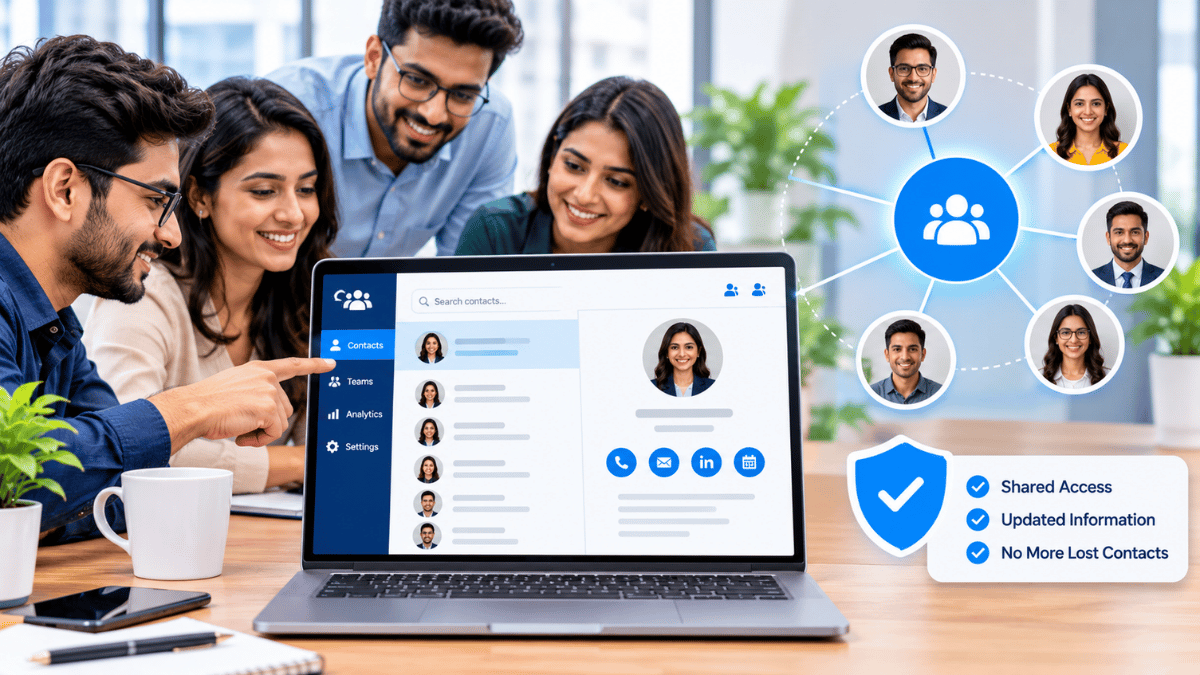
The platform started as a tool for individuals, but the team use case has become just as important. When an organisation has fifty employees sharing fifty different card designs, the company’s professional identity becomes fragmented. Signify Teams fixes that by giving administrators a central dashboard for seat management, role assignment, brand templates, and shared contacts.
Team members still control their own details — name, role, photo, and the links they want to share — but the visual identity and the core fields are consistent. The Signify Teams page explains the roles (Owner, Admin, Manager, Member), the seven-day free trial, the 5–100 seat range, and the Zoho CRM integration that keeps contact data aligned with the sales workflow.
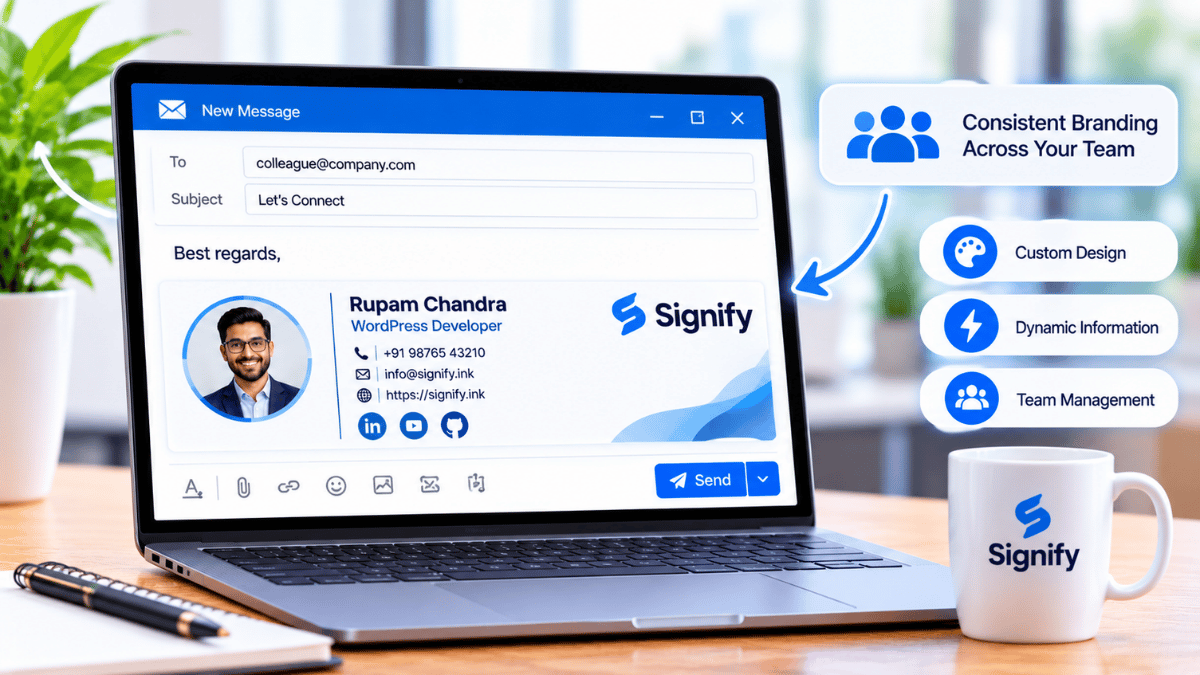
For organisations that want the card to appear in every email, the email signatures feature deploys a consistent signature across the team. For organisations that want the team discoverable on their website, the widgets page covers the embed options. The business brief adds a one-link company profile that can sit alongside the individual cards.
Why this matters for professionals
The shift from paper to digital is not just a format change. It changes what a business card can do. A paper card is a static record; a digital card is a live profile that can be updated, tracked, and connected to the systems a professional already uses. The online business card page covers the analytics — views, saves, and link clicks — that make the card measurable.
The smart business card page explains how the card fits into a larger workflow: capturing a lead at an event, syncing it to a CRM, and following up while the conversation is still fresh. The digital business card overview covers the broader product context. And the pricing page is the place to compare the free tier with the paid plans.
The story of Signify is a story about a team spread across three countries building a product that replaces a format that has not changed in decades. The engineering happens in Kolkata. The compliance and strategy sit in Norway. The global operations run from the USA. And the product — a live, shareable, always-current professional identity — is used by professionals and teams wherever they happen to work.
Frequently asked questions
What is Signify.ink?
Signify.ink is a digital business card platform. It lets professionals and teams create a live professional profile, share it by QR code, NFC tap, or link, and update it anytime without reprinting. Recipients do not need an app.
Who owns Signify.ink?
Signify is operated by Consac, a group with three entities: Consac AS in Norway (strategy and compliance), Consac Engineering Private Limited in Kolkata, India (engineering), and Consac LLC in Colorado, USA (global operations). The company page lists the office locations and responsibilities.
Is Signify.ink the same as the lighting company Signify?
No. Signify.ink is a digital business card platform. It is not affiliated with Signify N.V., the lighting company formerly known as Philips Lighting. The two are separate organisations with separate products.
Where is the product built?
The core platform is engineered in Kolkata, India, by Consac Engineering Private Limited. That team owns the architecture, security, UX/UI, analytics, and integrations. The Norwegian entity handles compliance and strategy, and the US entity handles global operations and partnerships.
Does Signify work for teams?
Yes. Signify Teams provides centralised card management, shared brand templates, team analytics, role-based access, and Zoho CRM integration. It includes a seven-day free trial and supports 5–100 seats. The pricing page covers the details.
Do recipients need the Signify app?
No. A recipient can open a shared card in a browser, view the profile, and save the contact as a VCF file without downloading anything. The send-a-card feature adds the VCF attachment directly to the email.
How do I get started?
Open Create a Card in Signify, add your professional details and links, customise the design, preview the card, and save. For team management, start at the Signify Teams page. For the product overview, visit the digital business card page.
Build a professional identity that stays current
Create a Signify digital business card and share it by QR code, NFC tap, or link — no paper, no reprinting, no stale details.
Create your Signify card