
 Signify.ink

A seismic shift is underway in the global business landscape. As organizations worldwide face unprecedented pressure to be transparent, sustainable, and accountable, Environmental, Social, and Governance (ESG) criteria have moved from the periphery to the core of corporate strategy.
However, meeting these stringent new standards requires more than just good intentions and glossy annual reports. It demands hard, verifiable data. This is where a new synergy is emerging between sustainability reporting and verifiable digital identity.
This report explores the story of how ESG is becoming the single greatest catalyst for digital transformation in professional identity. We will break down how tools like the Signify digital business card are not just modern networking conveniences, but vital components of a company's broader ESG compliance and reporting strategy.
The Nexus: ESG, Digital Identity, and Business Value
The relationship between ESG and digital identity is symbiotic. ESG frameworks create the demand for transparency and accountability. Digital identity provides the technological infrastructure to supply that transparency securely and at scale.
When a company claims to be sustainable, investors, regulators, and consumers want to know: How do you know? Can you prove it? Traditional, paper-based systems cannot provide the audit trails necessary to validate these claims. Digital identity—the ability to verify the attributes of a person, organization, or thing—is the missing link.
By integrating digital identity tools into their operations, businesses unlock tangible value. They mitigate risk, avoid greenwashing penalties, and build profound trust with stakeholders. The adoption of tools like Signify digital business cards for corporate teams is one of the most immediate, visible ways an organization can begin its digital identity journey while simultaneously checking the "E" box.
The "E" Pillar: Environmental Accountability
The environmental pillar requires organizations to prove their commitment to sustainability. This goes beyond publishing reports; it demands verifiable data on everything from carbon emissions to supply chain ethics.
Supply Chain Transparency
Consumers and regulators demand to know the origin of products. Digital identity allows for the creation of "digital product passports." Every handler in a supply chain can cryptographically sign off on their interaction with a product, creating a tamper-proof audit trail that proves sourcing claims and ensures compliance with regulations like the EU's Deforestation-Free Products Regulation.
Carbon Footprint Tracking
"Net Zero" commitments are meaningless without accurate measurement of Scope 1, 2, and 3 emissions. Digital identity applied to assets and processes allows for real-time energy consumption reporting. When a supplier provides a component, they can provide a verifiable credential attesting to its specific carbon footprint, moving companies from industry estimates to precise, auditable data.
Paperless Operations & Circular Economy
At the most fundamental level, adopting a Signify digital business card directly reduces an organization's environmental footprint. By eliminating paper cards, companies save trees and reduce waste. For example, a team of 500 employees replacing paper cards with Signify for Teams saves thousands of pounds of paper waste annually, contributing directly to environmental sustainability goals.
The "G" Pillar: Governance & Transparency
Governance refers to the systems of rules, practices, and processes by which a company is directed and controlled. Strong governance requires clear lines of accountability, transparency, and robust anti-corruption measures.
Anti-Fraud & KYC Compliance
Know Your Customer (KYC) and Anti-Money Laundering (AML) regulations require businesses to verify client identities. A reusable, government-verified digital identity can streamline this process. A customer verifies once and receives a verifiable credential, which they can present to other services for cryptographic verification. This reduces friction and makes it much harder for criminals to use fake identities.
Secure Credentialing & Access
Ensuring that only authorized individuals have access to systems is a core governance function. Digital identity wallets hold verifiable credentials for an individual's role and security clearance. Access to a critical system requires presenting a credential signed by HR and IT security, moving beyond simple passwords to attribute-based access control that is secure and auditable.
Professional Identity & Corporate Directory
For professional services firms, maintaining accurate directories is a governance challenge. A Signify digital business card can be linked directly to a corporate HR system. When an employee changes roles or leaves the company, their digital card can be updated or deactivated instantly, ensuring that the company's outward-facing identity is always accurate and compliant.
The Catalyst: Regulatory and Tech Drivers
The shift towards ESG-driven digital identity is being accelerated by a perfect storm of regulatory pressure and technological maturation.
| Year | Regulatory / Tech Milestone | Impact on Digital Identity |
|---|---|---|
| 2018 | GDPR Implementation (EU) | Fundamentally changed data privacy, accelerating the search for user-centric, decentralized identity solutions. |
| 2023 | Corporate Sustainability Reporting Directive (CSRD) | Expanded mandatory ESG reporting for ~50,000 EU companies, making auditable, verifiable data critical. |
| 2024 | W3C Verifiable Credentials Standard | Provided a standardized framework for issuing and verifying digital credentials, forming the tech backbone for trusted identity. |
| 2025 | SEC Climate Disclosure Rule (US) | Aligned US markets with global trends, amplifying the demand for accurate environmental data across supply chains. |
The Signify Solution: Starting with Professional Identity
The grand vision of an ESG-compliant world built on digital identity seems complex, but its implementation begins with a simple, powerful step: transforming how we manage professional identity. Every business interaction, every connection, and every credential is a data point in the larger ESG narrative.
Securing these at the individual level is the foundation for accountability at the corporate level. A Signify digital business card is a practical, immediate entry point into the world of verifiable digital identity.
Environmental Responsibility
Eliminate paper waste from traditional cards. By switching to Signify.ink, your organization directly reduces its carbon footprint. It is a visible commitment to sustainability in every interaction, easily communicated to clients.
Social Connection
Digital identity fosters authentic and inclusive networking. It ensures that the person you're connecting with is who they say they are, building a foundation of trust. This is crucial for equitable hiring, diverse supply chains, and secure stakeholder engagement.
Governance & Verifiability
A Signify digital business card is more than contact info; it is a verifiable credential. It can be linked to corporate directories and professional bodies, ensuring that roles and qualifications are always current and accurate. This provides a clear, auditable trail for corporate governance.
Frequently Asked Questions
How does a digital business card relate to ESG?
A Signify digital business card directly addresses the Environmental pillar by eliminating paper waste. Furthermore, by acting as a verifiable digital identity, it supports Governance by ensuring accurate corporate representation and supports Social goals through secure, authenticated networking.
What are Verifiable Credentials (VCs)?
Verifiable Credentials are a standard for digital identity that allows an issuer (like a university or employer) to cryptographically sign a claim about a person. The person can hold this in a digital wallet and present it as proof without revealing unnecessary personal data.
Is the data on my Signify card secure and compliant?
Yes. You control exactly what information is displayed on your public profile. Signify uses industry-standard encryption to protect your data, helping your organization comply with regulations like GDPR by minimizing unnecessary data exposure.
How can our organization roll out digital cards to meet ESG goals?
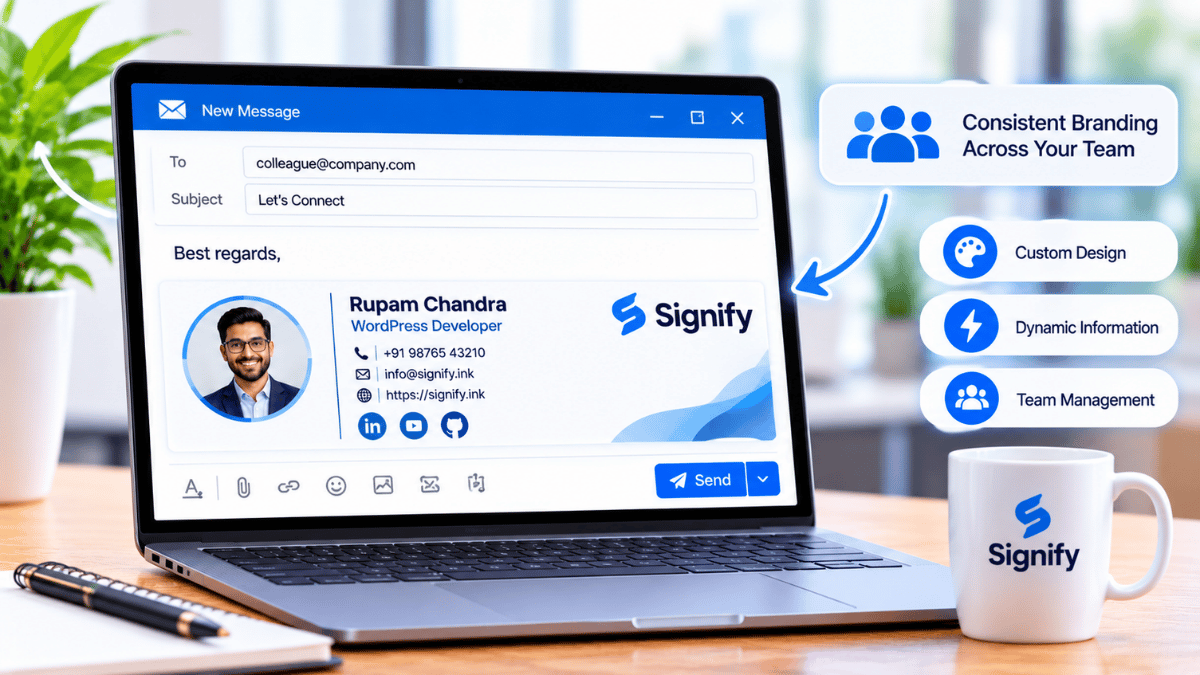
You can use Signify for Teams to centrally manage and provision digital business cards for your entire workforce. This ensures brand consistency, instantly updates employee roles, and dramatically reduces your company's reliance on paper.
Can we integrate digital identity tools with our existing HR systems?
Yes. Signify is designed to integrate with modern workflows. You can use features like our CRM integration to ensure contact data flows securely into your sales pipeline, creating a seamless, auditable data trail.
Ready to be Part of the ESG Solution?
The future of business requires trust, transparency, and accountability. By adopting Signify digital business cards, your organization takes a vital step toward meeting ESG standards while modernizing its professional identity.
Create your dynamic digital identity today and join the new era of corporate accountability.
Explore Signify Digital Business Cards

The "S" Pillar: Social Responsibility
The social component of ESG focuses on how a company manages relationships with its employees, suppliers, customers, and communities. Verifiable digital identity is becoming the cornerstone of building trust and ensuring ethical conduct in human-centric interactions.
Ethical Labor & Human Rights
Global supply chains can hide unethical labor practices. Self-sovereign identity (SSI) platforms can empower workers with a portable, secure digital identity. A worker can hold verifiable credentials for their age and certifications, allowing factories to prove to corporate clients that their workforce complies with safety and labor laws without exposing sensitive personal data.
Data Privacy & Consumer Trust
In the wake of regulations like GDPR and CCPA, data privacy is a massive social and governance issue. Decentralized identity models put users back in control. Instead of a company holding a sprawling database of user data, the user holds their own verifiable credentials in a digital wallet and grants selective access. This "data minimization" builds profound brand loyalty and trust.
Diversity, Equity & Inclusion (DEI)
Digital identity systems can enable the secure and anonymous reporting of demographic data. An employee could use their digital wallet to issue a "zero-knowledge proof" confirming they belong to an underrepresented group without revealing their specific identity. This allows the company to collect accurate aggregate data for DEI reporting while fully respecting individual privacy.