 Digital Card

Digital Business Cards vs. Email Signatures: When to Use Each
Both digital business cards and email signatures are essential tools for professional communication — but they serve distinct purposes. Understanding when and how to use each can sharpen your brand presence, improve networking outcomes, and create a more consistent digital identity across every touchpoint.
What Is a Digital Business Card?
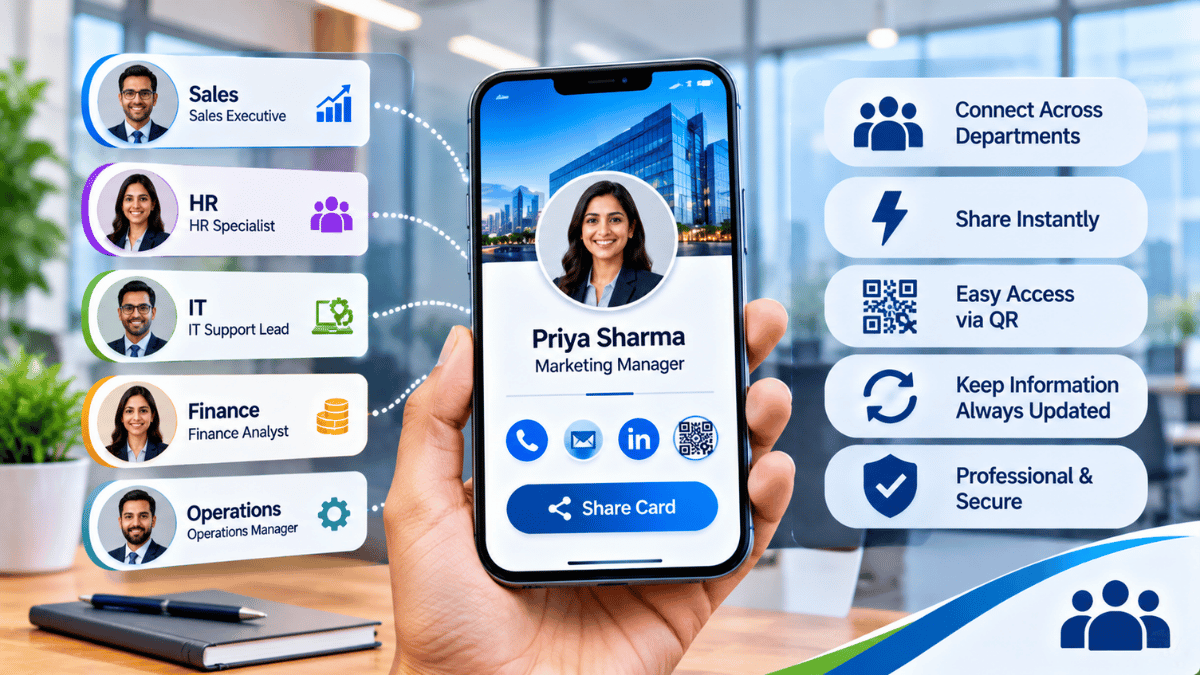
A digital business card is an interactive, shareable profile that contains your professional contact details, links, and branding — accessible via a URL, QR code, or NFC tap. Unlike traditional paper cards, digital cards can be updated in real time, include clickable links to social profiles or portfolios, and are always with you on your phone. They are designed for active, intentional sharing — at networking events, conferences, client meetings, or even virtual introductions.
What Is a Dynamic Email Signature?
An email signature is a branded block of text automatically appended to outgoing emails. A dynamic email signature goes further, allowing for live-updated banners, promotional CTAs, social media icons, and consistent visual formatting across an entire team. It reinforces your brand on every email sent — passively, without any extra effort from the sender.
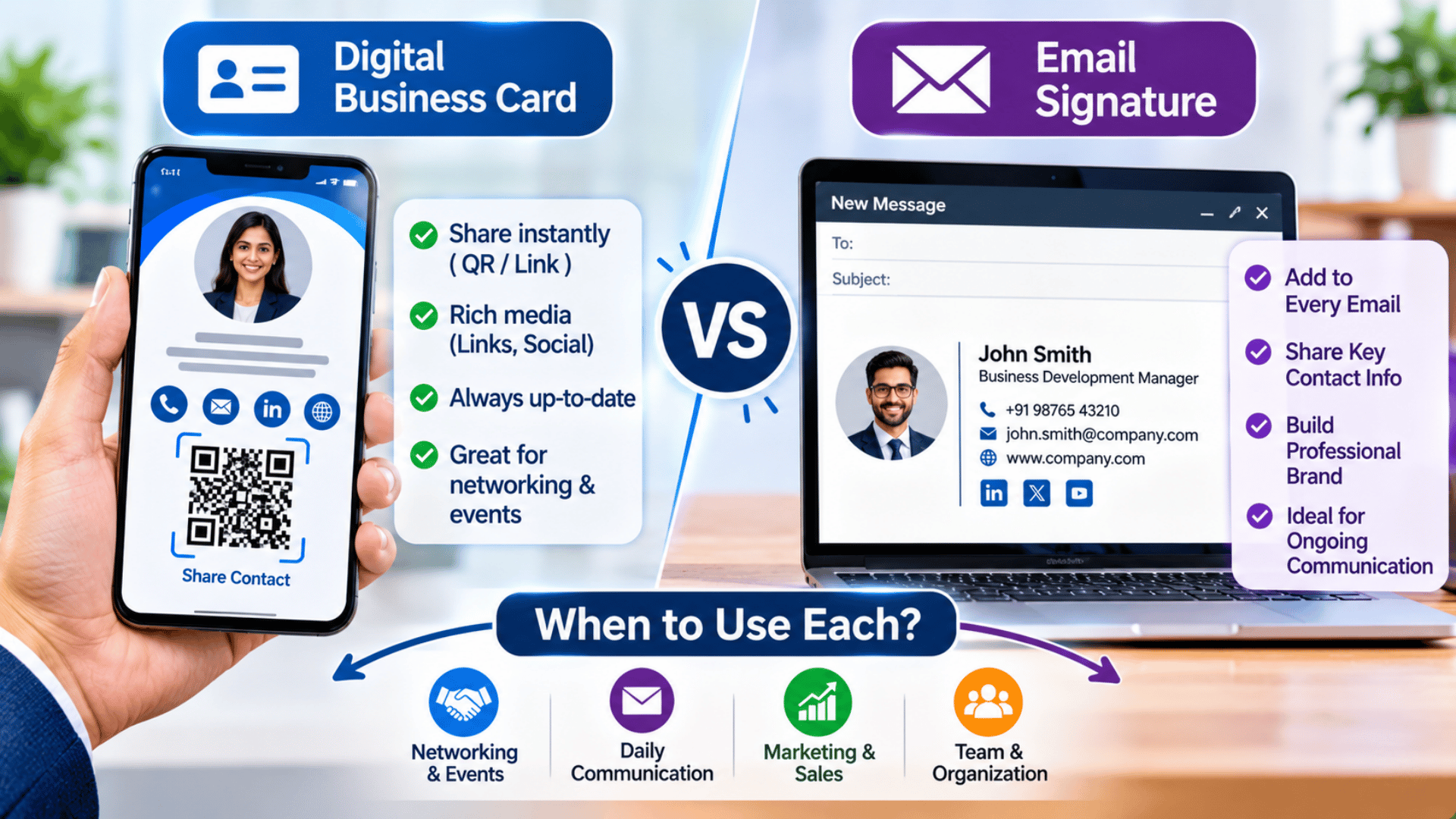
| Feature | Digital Business Card | Email Signature |
|---|---|---|
| Delivery Method | QR code, link, NFC | Appended to emails |
| User Action | Active sharing | Passive / automatic |
| Best Context | Networking, events | Ongoing correspondence |
| Updatable | Yes, in real time | Yes, centrally managed |
| Rich Media | Full profile, links, photo | Banner, logo, CTA |
When to Share a Digital Business Card
Digital business cards shine in high-intent networking moments. Use them when meeting someone new at a conference or industry event, during a first client introduction, at trade shows where paper cards get lost, or when connecting virtually via Zoom or LinkedIn. Because recipients can save your details directly to their phone or CRM, the follow-through rate is significantly higher than handing over a paper card that ends up in a drawer.
When an Email Signature Is More Useful
Email signatures work best in ongoing, recurring communication. Every email you send — a proposal, a follow-up, a newsletter reply — carries your brand automatically. This passive presence reinforces credibility without requiring any extra action. Dynamic signatures also allow teams to push timely campaign banners or announcements to all outgoing email at once, making them a powerful tool for coordinated marketing outreach and consistent brand exposure at scale.
How Both Tools Support Professional Branding
Together, digital business cards and email signatures form the two pillars of a modern digital identity. The business card handles your first impression in the physical or virtual world, while your email signature maintains brand consistency throughout the entire relationship lifecycle. Both should use consistent colors, logos, fonts, and messaging — creating a unified appearance that builds trust and recognition across every professional interaction.
Creating a Connected Digital Identity for Employees
For organizations, the real power lies in deploying both tools consistently across every employee. Centrally managed digital business card platforms and email signature management software ensure that all staff present a unified, on-brand identity — regardless of department or seniority. When a sales rep shares their card at an event and follows up by email, the experience feels seamless and polished. This kind of cohesion elevates the entire organization's professional image and builds lasting credibility with clients and partners.