 Signify.ink

Personal branding has been a professional development concept for nearly three decades — the term was popularised by Tom Peters’ 1997 Fast Company essay “The Brand Called You” — but the tools available for actually building a personal brand have changed dramatically in the last five years. Where personal branding used to mean a well-maintained LinkedIn profile and a polished resume, it now means a consistent professional identity that follows you across every digital touchpoint. Signify digital business cards sit at the centre of that shift. They give professionals one place to consolidate their contact details, portfolio, and social presence — and one link that every recipient can save, share, and refer back to. This guide explains what personal branding actually requires today, why digital business cards make it easier, and how to build a professional presence that stays current.
A quick definitional note: personal branding, in the sense used here, is the deliberate shaping of how you are perceived professionally. The Wikipedia entry on personal branding traces the concept through its origins in marketing and its later application to individual professionals. It is not the same as marketing yourself aggressively, and it is not the same as posting constantly on social media. It is the quieter, more durable work of making sure that when someone looks you up, everything they find is coherent, current, and credible.
What personal branding actually means
Personal branding is sometimes described as “the process of shaping how people perceive you professionally.” That is accurate but abstract. In practice, a personal brand has three concrete components, and each one requires different work.
Your expertise
What you know and how you apply it. This is the substance of your personal brand — the credentials, skills, and achievements that justify the position you are claiming. It cannot be substituted with design or marketing.
Your reputation
How others actually perceive you, based on their own experience and the referrals and second-hand signals they encounter. This is largely built through actions over time — the way you show up in meetings, deliver work, and treat the people you interact with.
Your digital presence
What someone finds when they look you up. This is the surface the professional directly controls: the profile, the links, the portfolio, the contact options, the consistency of visual identity across every touchpoint.
Most personal branding advice focuses on the third component, because it is the one the professional can actually improve quickly. The first two take years and cannot be shortcut. But the third is where a lot of professional opportunity is lost — because the digital presence that a professional presents rarely matches the quality of the expertise and reputation that sit behind it.
A Signify digital business card is a tool for the third component specifically. It does not manufacture expertise. It does not create reputation. But it does make the digital presence — the surface that receives every new contact — more coherent, more current, and more complete than what a paper card or a bare LinkedIn URL can achieve.
Why it matters more than ever
Three structural shifts have made the digital surface of personal branding more important than it was a decade ago. Each is worth understanding because it explains why investing in the surface actually pays off.
The lookup became the first impression
A decade ago, a new professional contact would form an impression of you in the meeting, then perhaps look you up later. Today, the lookup often happens during or immediately after the meeting — from the phone the contact is already holding. The digital surface is no longer a secondary touchpoint; it is the first touchpoint that the contact can independently verify. If it is inconsistent, the meeting's impression is undermined. If it is coherent, the meeting's impression is reinforced.
Working relationships are now cross-geography by default
Remote and hybrid work have expanded the number of people a professional can meaningfully interact with in a given week. That is a good thing for opportunity, but it creates a different problem: the professional cannot rely on physical context (an office, a shared location, a mutual connection) to reinforce their professional identity. The digital surface becomes the primary carrier of that context — what you do, who you have worked with, what your portfolio looks like — for everyone who has never met you in person.
The tools are finally good enough
For most of the last decade, “building a personal brand online” required maintaining a website, a LinkedIn profile, a portfolio, a Twitter presence, and a business card, all pointing in slightly different directions. The result was usually fragmentation rather than brand. The current generation of digital business card tools — including Signify — lets a professional consolidate those surfaces into a single live profile that stays current automatically. That consolidation is what makes the personal branding investment actually compound, rather than dissolving across five separate presences.
The evolution of networking
Personal branding and professional networking are closely connected: the network is where the reputation is built, and the reputation is what the network sees. That connection has been reshaped by three distinct eras of networking, and each one has changed what a professional needs to invest in.
| Era | Primary tools | What worked | What didn’t |
|---|---|---|---|
| Traditional (pre-2010) | Paper cards, in-person events, phone calls, physical mail | Handshake weight; the physical object created a lasting trace | Manual data entry; cards lost within a week; no way to update after printing |
| Digital-native (2010–2020) | LinkedIn, email, virtual events, social media | Reach; searchable professional history; scalable introductions | No single source of truth; fragmenting profiles; irrelevant connections; weak conversion from online to real relationship |
| Consolidated (2021+) | Digital business cards (NFC, QR, link), email signatures, personal websites, integrated social profiles | Consistency across touchpoints; live updates; measurable engagement; browser-based (no app for the recipient) | Requires discipline to keep the profile current; not yet universal, so some contacts still expect paper |
The pattern in the table is that each era added a new surface without removing the previous one. Paper cards did not disappear when LinkedIn arrived; LinkedIn did not disappear when digital business cards arrived. Professionals now operate across all three eras simultaneously, and the personal branding work is partly about making them feel like one coherent identity rather than three separate ones.
What digital business cards are
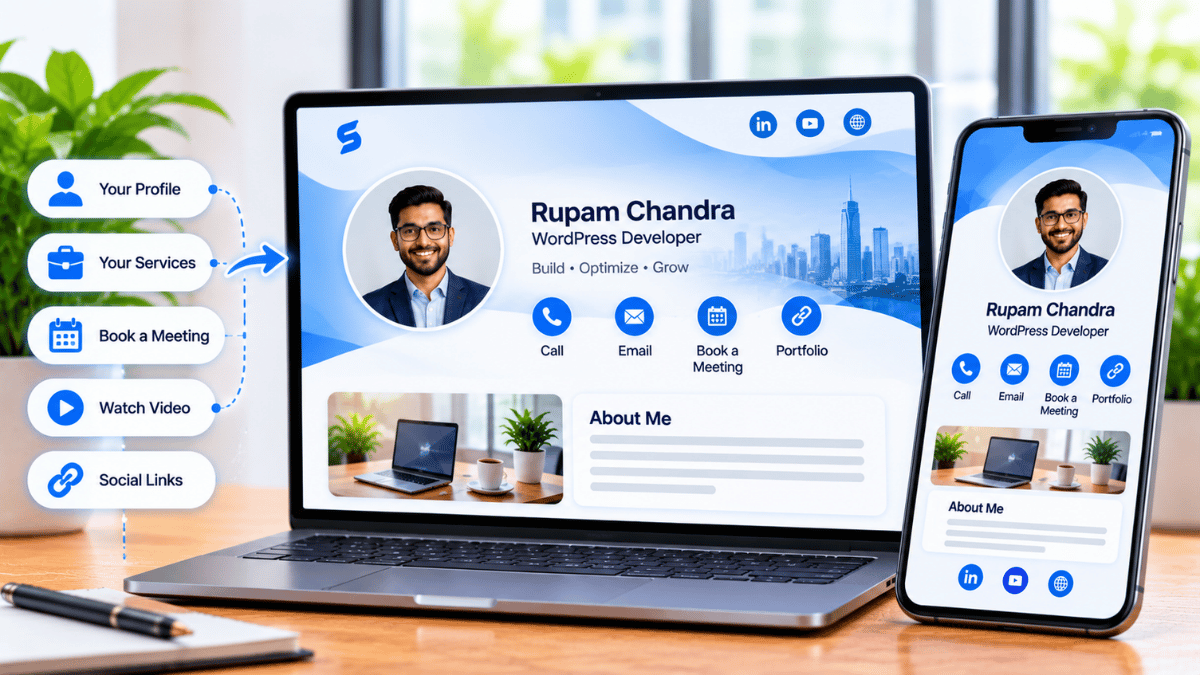
A digital business card is an online professional profile that replaces — or supplements — the paper card. It shares in one tap or one click, opens in any browser on any device, and carries far more information than a paper card could. For professionals working on personal branding, the format’s key advantage is that it is a single profile that all of the professional’s links, credentials, and contact options can point to.
What a Signify card can carry
- Name, title, and professional photograph
- Contact details: phone, email, and messaging
- Company details and website
- Social profiles: LinkedIn, X, Instagram, YouTube, and others
- Portfolio, case studies, or published work
- Booking calendar link for scheduling
- Documents, articles, or downloadable resources
- A dynamic QR code and NFC capability for sharing in person
The comparison with a paper card is not just about capacity — it is about which surface is authoritative. A paper card can only be as current as the day it was printed. A Signify profile is the same URL across every channel, and updating it updates every saved copy. For personal branding, that currency is the difference between a professional who looks professionally managed and one who looks neglectful.
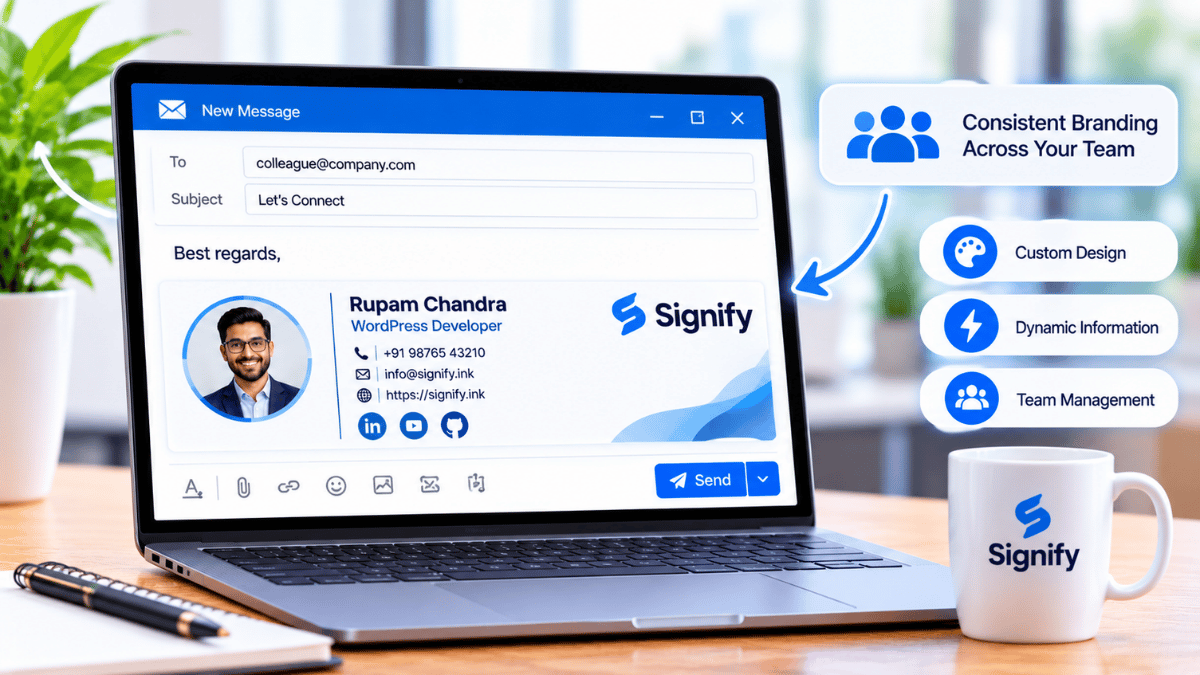
The sharing methods matter too. A Signify NFC card works for in-person meetings — a single tap shares the profile in under a second. A dynamic QR code works for printed materials and events. A direct link works for email and messaging. An email signature keeps the profile in every outgoing message. All four routes lead to the same destination, so the professional’s brand stays consistent regardless of how the introduction happened.
How digital cards support personal branding
The connection between digital business cards and personal branding is straightforward, but it is easy to underestimate. Four mechanisms matter most.
1. Consolidation
Most professionals have at least four separate online identities: a LinkedIn profile, a website or portfolio, a social media presence (or several), and a place where their contact details live. Those four identities rarely say the same thing. A digital card consolidates them into a single primary profile, with the other surfaces as links. When someone looks the professional up, there is one authoritative destination rather than four slightly different versions of the same person.
2. Consistency
When the digital card is the primary profile, the same photograph, the same bio, and the same contact details appear everywhere the professional is encountered — the card, the email signature, the widget, the LinkedIn profile. Consistency of presentation is one of the quietest but most effective forms of personal branding. It signals that the professional is intentional about how they show up, which is itself a form of credibility.
3. Currency
A personal brand that goes stale is not just neutral — it actively damages. A professional whose card, profile, or signature still lists a role they left two years ago looks out of touch. A Signify card updates once and every saved copy reflects the change. For a professional who changes roles, companies, or focus areas with any frequency, that feature alone justifies the switch from paper.
4. Measurability
A paper card gives no data. A digital card shows views, contact saves, and link clicks — which turns the professional’s networking effort from a hopeful activity into one that can be reviewed and improved. The analytics layer is not the most glamorous feature of a digital card, but for anyone taking personal branding seriously, it is the difference between guessing and knowing.
The features that matter
Digital business card platforms vary substantially in what they offer. For personal branding purposes, six features are worth prioritising.
Centralized profile
A single URL that every link, credential, and contact option points to. This is the foundation — without it, the rest of the features do not add up to a coherent brand.
Real-time updates
The ability to change role, contact details, or links without reprinting or re-sharing. Personal brands evolve; the tool needs to keep up.
QR code sharing
A dynamic QR code that works with any phone camera and can be printed on materials without needing to be regenerated. This is the most universal in-person sharing method.
NFC tap
A Signify NFC card shares the profile in under a second at in-person meetings. Faster and more elegant than QR for one-to-one introductions.
Social integration
Links to LinkedIn, X, Instagram, YouTube, and other relevant professional platforms, so that the profile is a hub rather than a dead end.
Analytics
Views, saves, and link clicks, so the professional can see which touchpoints are producing engagement and which are not.
Not every professional needs every feature. A consultant whose networking is primarily in-person may prioritise NFC and QR sharing. A professional who networks mostly over email may prioritise the Signify email signature integration. A professional building a public personal brand may prioritise the website widget. The point is that the features are modular — the professional chooses the combination that fits their actual networking pattern, rather than adopting every available capability.
Strategies for different professional types
The personal branding work is not identical across professions. What a founder needs to communicate is different from what a consultant needs to communicate, which is different again from what an executive or freelancer needs. A digital business card can be shaped to fit each.
Founders
A founder’s card often needs to serve both “founder” and “company” in one profile — links to the company site, investor materials, product demos, and social proof, all under one name. Signify Teams supports multiple cards per account if the founder needs a distinct card for fundraising versus hiring.
Consultants
For a consultant, the personal brand is the product. Expertise highlights, case studies, testimonials, and a booking link are the priority — a card that turns an introduction into a scheduled consultation.
Sales professionals
For a sales professional, the card carries product resources, contact information, a calendar link, and follow-up channels — everything the prospect might need after the first conversation.
Recruiters
A recruiter’s card typically includes career opportunities, company information, and professional contact details — the tools a candidate needs to evaluate the opportunity and reach out.
Freelancers
For a freelancer, the portfolio is the brand. A digital card that carries the portfolio, service offerings, testimonials, and project examples is often more effective than the freelancer’s own website.
Executives
An executive’s card tends to prioritise leadership bio, company vision, media and press, and speaking engagements — the elements that support board-level and industry-level credibility.
In each case, the underlying design principle is the same: the card should reflect what the specific professional needs to communicate, not a generic template. The most common failure is that professionals treat their digital card as a slightly more elaborate business card — when in fact it should be a compact personal brand statement in its own right.
Common personal branding mistakes
Six mistakes show up repeatedly in professional profiles, and each one is fixable.
Inconsistent profiles
The LinkedIn headline says one thing, the website bio says another, the digital card says a third. Consistency across surfaces is not about repeating the same words — it is about the message being the same even when the wording differs. A professional whose LinkedIn emphasizes consulting and whose card emphasizes speaking engagements is telling two different stories.
Outdated contact information
An old phone number or email address is the most damaging kind of outdated information, because it implies that the professional does not check their own details. If a contact tries to reach the professional and the channel is dead, the trust cost is disproportionate to the size of the error.
Weak professional messaging
“Passionate about marketing” or “experienced professional” are not messages — they are absence of message. A professional brand needs a specific statement of what the professional does and for whom. “I help B2B SaaS companies turn cold outbound into warm pipeline” is a message; “passionate about sales” is not.
Poor networking follow-up
A digital card makes the follow-up easier, not automatic. The professional still has to send the message, reference the conversation, and stay in touch. The card removes the friction; it does not remove the requirement.
Lack of visibility
A professional who never publishes, never posts, and never shares their work has a personal brand that only exists inside the room they are standing in. Visibility is a real requirement, not a vanity metric.
Neglecting the tools
A well-designed digital card that nobody updates, or an email signature that points to a stale profile, is worse than no card at all — because it signals neglect. The tools have to be maintained to do the work they are meant to do.
Personal branding at organizational scale
For an individual professional, personal branding is a solo activity. For an organization, it becomes something else: the sum of every employee’s personal brand, viewed by every prospect and customer the company interacts with. When the employees are consistent, the organization looks coherent. When they are not, the organization looks fragmented regardless of how much it invests in its corporate brand.
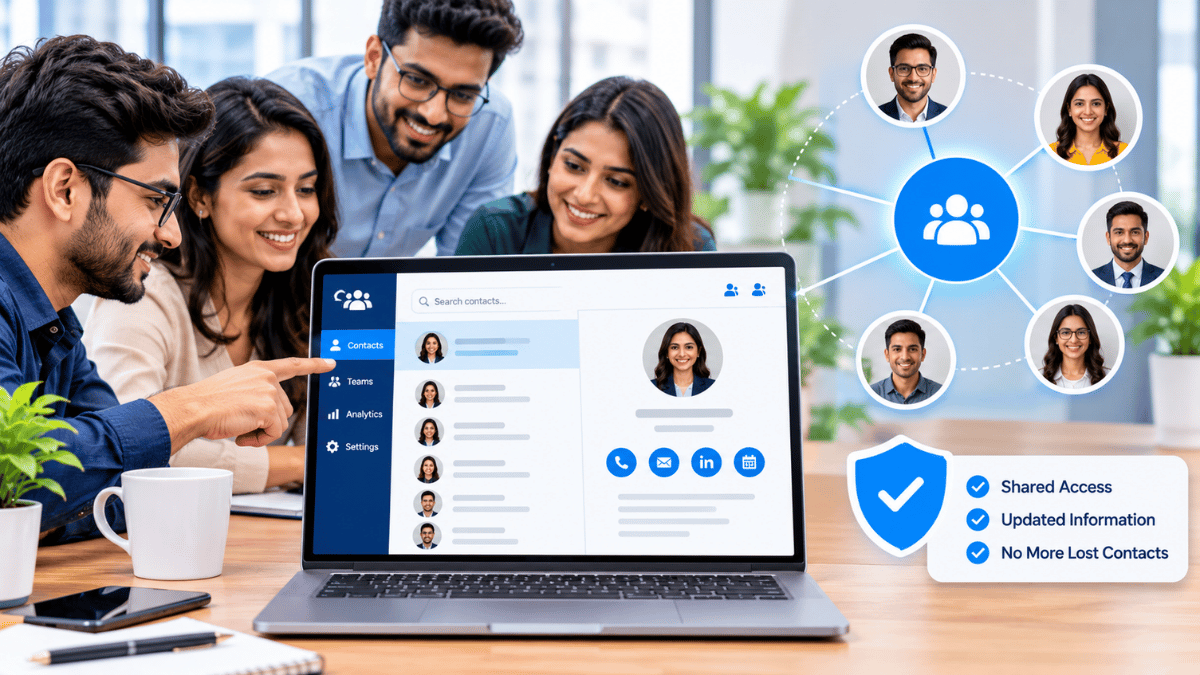
Signify Teams addresses this by providing organization card templates — the shared logo, theme, and required fields that every employee card inherits, while individual details remain the employee’s own. When the company rebrands, the template updates once and the change propagates across every employee’s card. That consistency is the organizational-level equivalent of the personal-level consistency the individual professional builds.
For organizations that also maintain a public-facing page, Business Brief extends the same logic to the company level — a single branded destination that routes visitors to individual employee cards. Between Signify Teams, Business Brief, and each employee’s card, the organization has a coherent professional identity at every touchpoint. The pricing page covers per-seat costs, and the Security Policy and Privacy Policy are the documents enterprise buyers and compliance reviewers will want.
How to get started
Building a digital personal brand with Signify takes about ten minutes for the initial setup. The compounding value comes over the following months as the profile is shared consistently.
- Create your profile at Signify’s card editor. Add your name, title, professional photograph, and a one-line bio. The bio is the most important part — it should tell a new contact exactly what you do and who you do it for.
- Add the links that define your work. LinkedIn, your website or portfolio, a booking calendar, and one or two selected social profiles. Skip platforms you do not actively use — an abandoned profile is worse than no profile.
- Choose your sharing surfaces. At minimum, add the Signify email signature — it appears in every message and produces the highest volume of touchpoints. Add a physical card (via NFC or QR) if you meet people in person frequently.
- Test on a device that isn’t yours. Scan the QR code and tap the NFC card against a friend’s phone. Confirm that the profile opens correctly and the important links work. A two-minute check prevents the failure mode of a card that does not open.
- Keep the profile current. When your role, contact details, or primary links change, update the profile. The consistency that makes a personal brand work depends on the underlying information being accurate.
For teams, the next step is Signify Teams — a seven-day free trial lets you evaluate the deployment before committing. For related reading on the specific psychology of profile design and trust, the Signify Insights library has companion articles on those topics.
Frequently asked questions
What is personal branding?
Personal branding is the deliberate shaping of how you are perceived professionally. The term was popularised by Tom Peters’ 1997 Fast Company essay “The Brand Called You”. It encompasses your expertise, your reputation, and your digital presence — three components that require different kinds of work.
Why are digital business cards important for personal branding?
Because they consolidate the digital surface of a professional’s brand into a single, current, coherent profile. Most professionals have four or five separate online identities (LinkedIn, website, social profiles, contact details) that rarely say the same thing. A Signify card gives them one authoritative destination, which every other surface can point to.
Do personal brands need to be on social media?
Not necessarily, but the question is worth reframing. Personal branding is not the same as being a social media influencer — it is about whether a professional is visible to the people who might hire, refer, or partner with them. For some professionals that means an active LinkedIn presence; for others it means a well-maintained website or portfolio; for others it means a clean digital business card and consistent email signatures. The right surface depends on the audience.
What is the difference between a personal brand and a corporate brand?
A corporate brand is the reputation of the company. A personal brand is the reputation of the individual. For professionals who work inside organizations, the two are related but distinct — the personal brand travels with the individual across roles and companies, while the corporate brand remains with the organization. Both matter, and neither substitutes for the other.
Do recipients need an app to view a Signify profile?
No. The profile opens in a standard web browser on any smartphone, tablet, or computer. There is nothing to download, no account to create, and no compatibility issue to manage.
Can I have more than one digital card for different audiences?
Yes. Signify Teams supports multiple cards per account, so a professional who operates across distinct audiences — a consultant who also teaches, or a founder who is also an angel investor — can maintain separate cards without maintaining separate systems.
How does Signify Teams help organizations maintain brand consistency?
Signify Teams provides organization card templates that lock the shared logo, theme, and required fields while preserving individual employee details. When the company rebrands, the template updates once and the change propagates across every employee card automatically — the organizational equivalent of an individual professional keeping their personal brand current.
What analytics does Signify show?
Views, contact saves, and link clicks per card, plus the source that produced each view. The digital business card page covers the analytics layer in more detail. The analytics do not identify individual viewers — they report aggregate engagement.
Is Signify secure enough for professional use?
Signify encrypts data in transit with TLS 1.2+ and at rest with AES-256, hosts on ISO 27001/27017 and SOC 1/2/3 certified infrastructure, and supports field-level visibility controls and remote logout. The Security Policy and Privacy Policy are the documents that enterprise buyers and compliance reviewers will want.
What is the first step?
Create a free Signify card, add your details and links, and test the QR code on a device that is not yours. The whole setup takes about ten minutes and the free tier is enough to evaluate the workflow before committing to a paid plan.
Give your personal brand a coherent digital surface
One link that consolidates your contact details, portfolio, and social presence — and stays current when your work evolves.
Create your free digital card