How Secure Are Digital Business Cards?
Digital business cards make networking faster and more flexible, but security matters. This guide explains common risks, practical safeguards, and how modern platforms help professionals share information safely.
Why this question matters
A digital card can include contact details, company information, social profiles, calendars, and documents. That convenience is valuable, but it also means privacy and access control deserve careful attention.
The practical answer
When built and used properly, digital business cards can be safer and easier to manage than paper cards because they support updates, visibility controls, and better account protection.
Understanding digital business cards
A digital business card is an online profile used to share professional details electronically. It can be opened through QR codes, NFC taps, direct links, email signatures, messaging apps, and virtual meetings.
Security comparison overview
A simple visual comparison of paper cards and digital cards.
Users can decide what information is visible and what stays private.
Profiles can be updated centrally instead of reprinting cards.
Recipients can view your details quickly from any device.
Common security concerns
Digital cards are safe when the platform and the user follow good practices. The most common risks come from oversharing, weak accounts, and untrusted links.
Risks of traditional paper cards
- • Lost or damaged cards.
- • Outdated contact details after printing.
- • No visibility into who used the card.
- • No post-sharing access control.
- • Manual entry mistakes when saving information.
Bottom line
Digital cards do not remove security concerns, but they give users far more control than paper cards ever can.
Security features to look for
When choosing a digital business card platform, focus on the features that support privacy, account protection, and dependable profile management.
Best practices for safe networking
Security is strongest when the platform and the user both do the right things. These habits help keep your professional identity protected.
Share only what is necessary
Avoid oversharing private or sensitive details.
Use strong passwords
Protect your account with unique credentials.
Enable multi-factor authentication
Add an extra layer of account protection.
Keep information updated
Prevent confusion and reduce outdated sharing.
How Signify supports secure networking
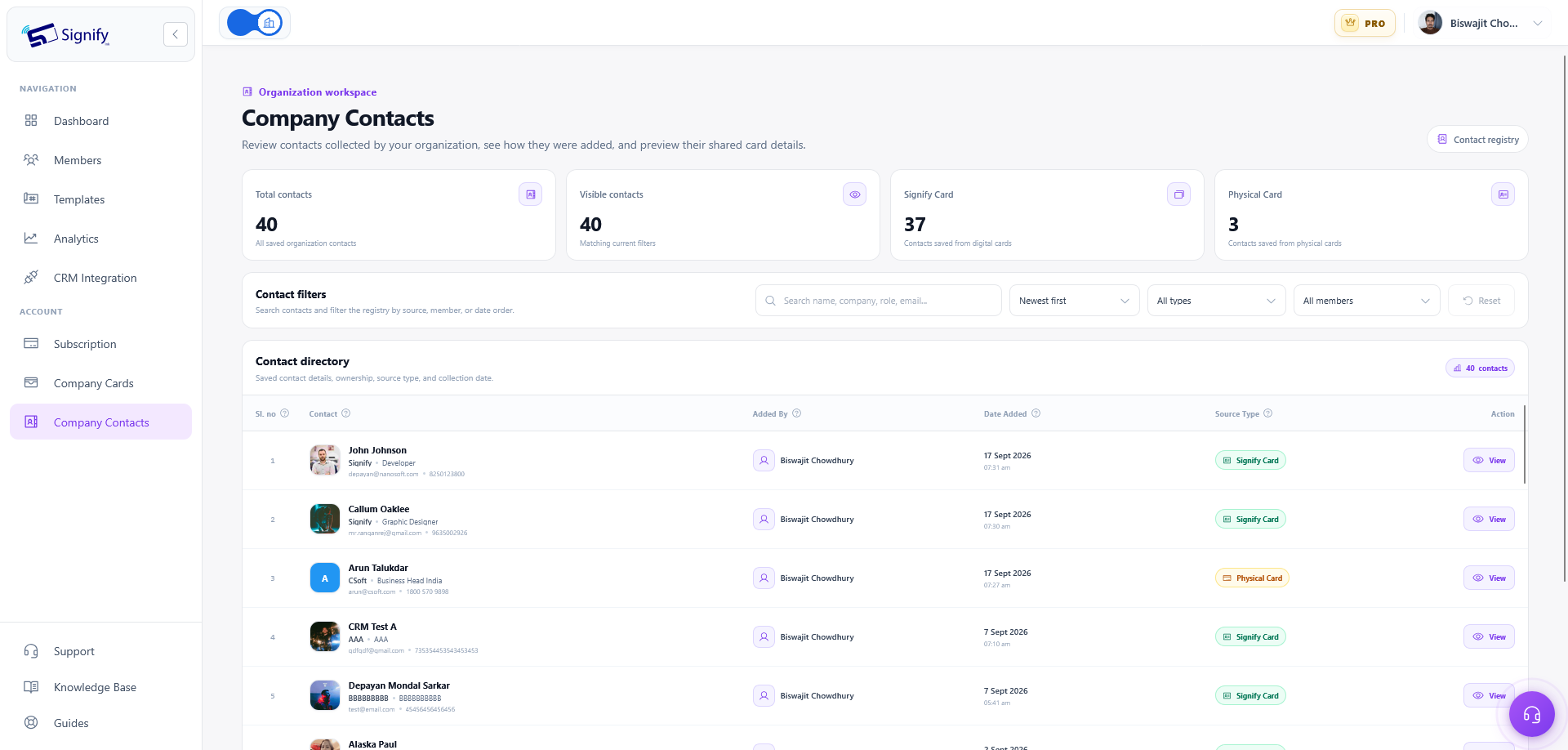
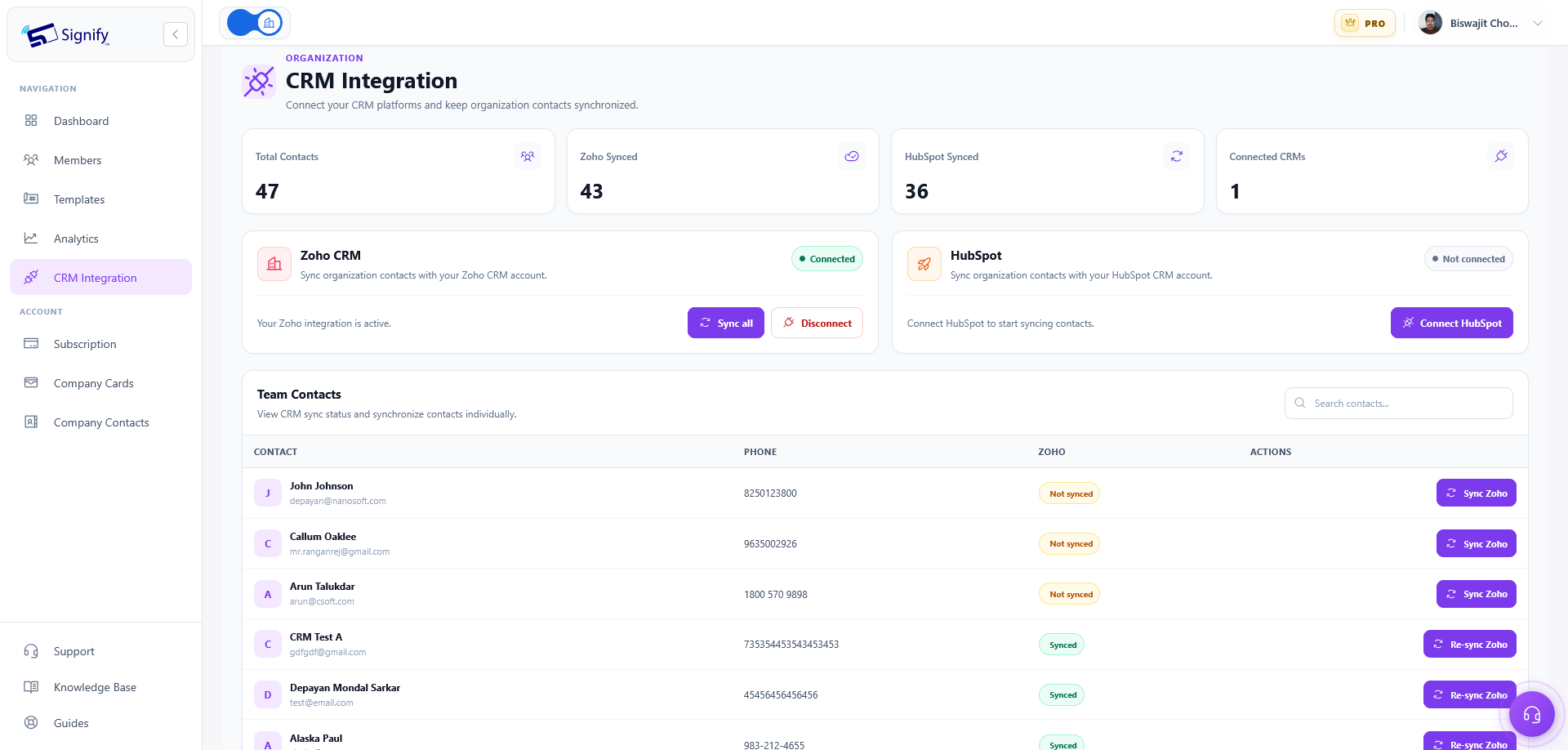
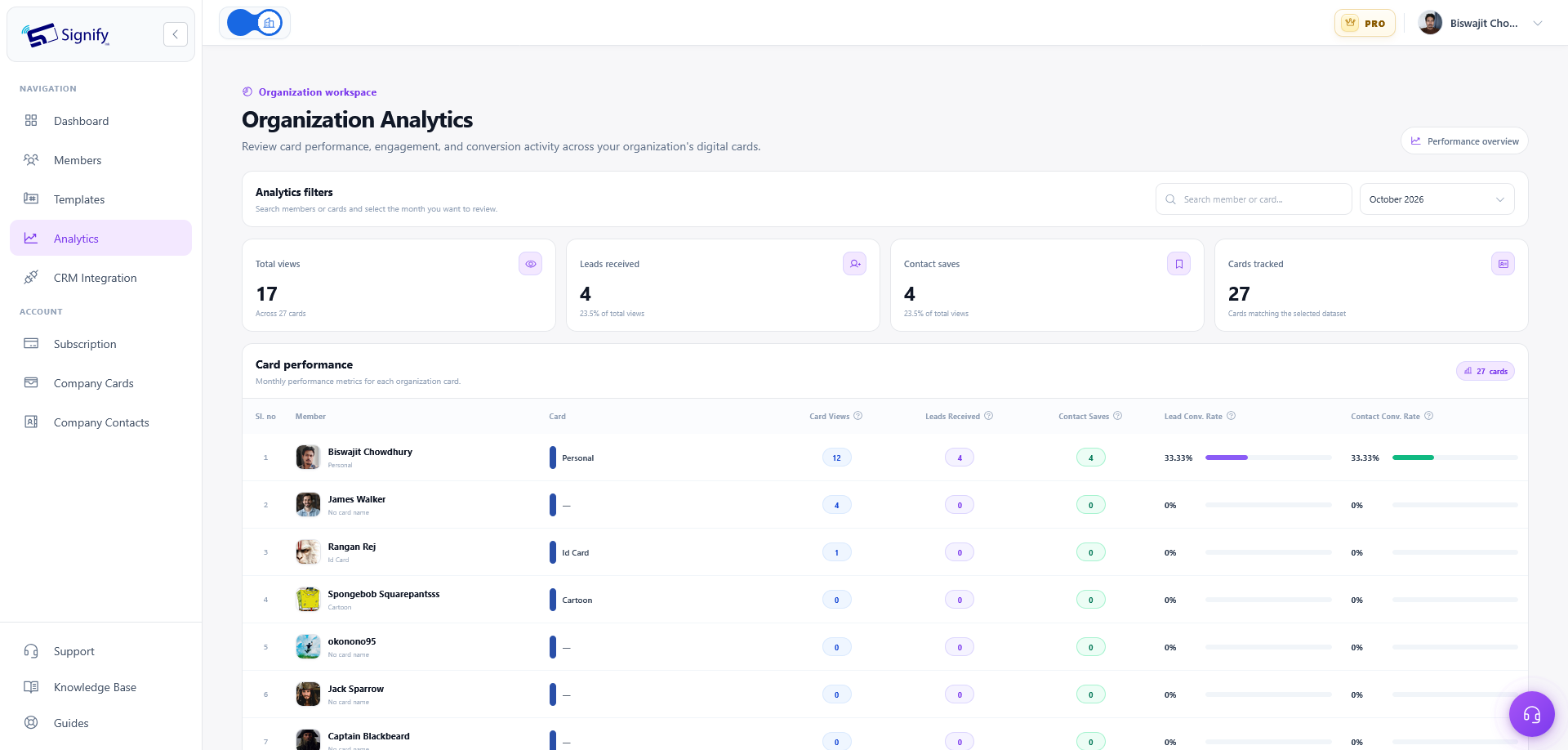
Signify helps professionals and teams create digital business cards with centralized control, QR and NFC sharing, profile updates, and consistent branding.
Security for teams and businesses
Organizations benefit from controlled information management, faster employee onboarding, reduced administrative work, and a more consistent brand presence across departments.
Frequently asked questions
Here are the most common questions professionals ask about digital business card security.
Can digital business cards be hacked?
Like any online platform, security depends on the provider and the user’s habits. Reputable platforms reduce risk through safeguards and good account protection.
Are QR code business cards safe?
Yes, when the QR code comes from a trusted source and points to a legitimate profile or website.
Can I control what people see?
Most modern platforms let users control profile visibility and choose which information is shared publicly.
Do digital business cards work without apps?
Many platforms allow recipients to view cards directly in a browser without installing anything.
Conclusion
Digital business cards can be a secure and efficient networking tool when paired with strong privacy settings, account protection, and a reliable platform. For professionals and teams, they offer more control than paper cards and a more flexible way to manage professional identity.