Why Digital Business Cards Get More Engagement Than Traditional Contact Sharing
Professional networking has changed. People still meet at conferences, attend trade shows, participate in business meetings, exchange introductions, and build relationships face-to-face.
But the way those relationships continue after the first conversation is increasingly digital.
A digital business card can connect the entire experience between meeting someone and staying connected.
The New Networking Reality
Someone may need to save your contact information, visit your website, connect with you on LinkedIn, review your portfolio, schedule a meeting, or learn more about your company.
A traditional paper business card can provide the basic information needed to do this.
A digital business card, however, can connect the entire experience.
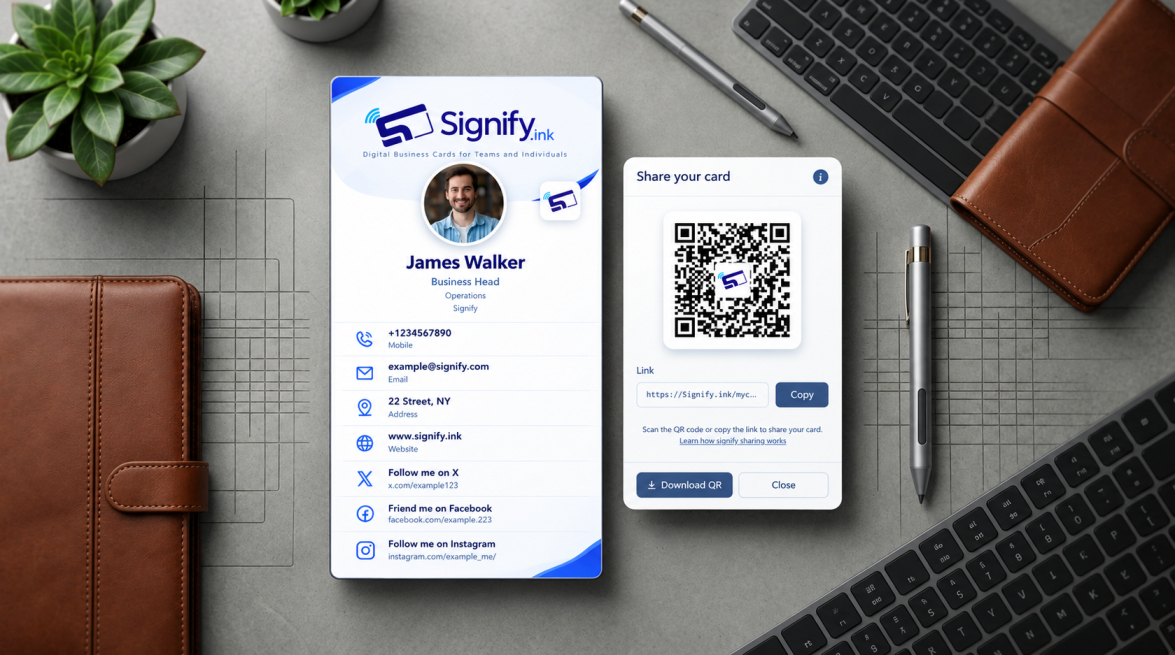
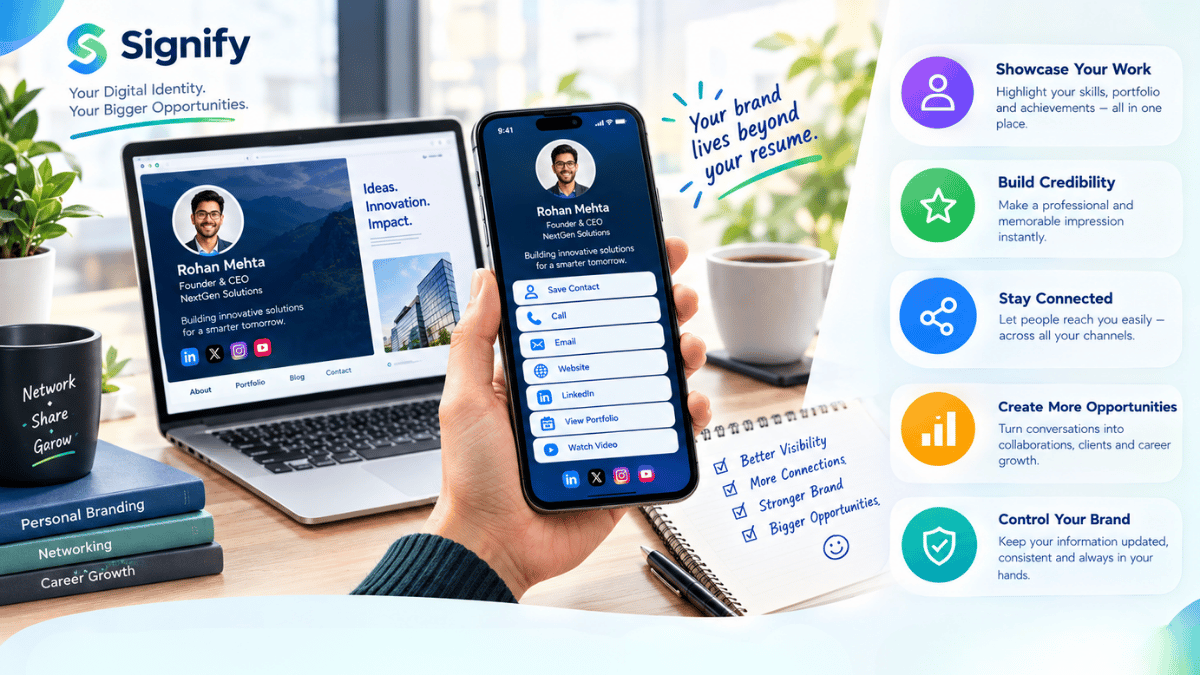
A printed card is primarily a static information carrier. A digital business card can be an interactive professional profile—a central place where people can discover who you are, what you do, how to contact you, and where to go next.
This is one reason digital business cards are becoming increasingly popular among entrepreneurs, sales professionals, consultants, recruiters, freelancers, executives, and organizations.
The Problem With Traditional Contact Sharing
Imagine meeting a potential client at a conference. You have a great conversation. You exchange business cards. Then the event ends.
The prospect returns to a busy schedule with dozens of other conversations, emails, meetings, notifications, and tasks.
- In a wallet
- In a pocket
- In a notebook
- On a desk
- In a drawer
- In a pile of other cards
The information is technically available. But availability does not necessarily create action.
The recipient still has to decide what to do next. They may need to manually save your number, search for your website, find your LinkedIn profile, or type your email address.
Every additional step introduces friction. Digital business cards are designed to reduce those steps.
From Contact Information to Digital Experience
The fundamental difference between a traditional business card and a digital business card is interactivity.
A paper card communicates information.
A digital card can facilitate actions.
"Here is where you can connect with me and learn more."
That is a much more useful proposition in a digital-first professional environment.
Why Friction Matters in Professional Networking
Friction refers to the effort required to complete an action. In networking, friction can appear in surprisingly small ways.
Traditional
Digital
The second journey requires fewer manual steps.
That does not guarantee that someone will respond, become a customer, or start a business relationship. But reducing unnecessary effort makes it easier for people to take the next action.
The Psychology Behind Digital Engagement
Digital business cards can benefit from several established principles of human-computer interaction and consumer behavior.
These principles do not mean that a digital card automatically creates engagement. Design matters. Context matters. The quality of the relationship matters.
Five particularly relevant principles are:
Immediacy: Make the Next Step Available Now
Professional networking often loses momentum because the next action is delayed.
You meet someone today. You exchange information. You return to work. Tomorrow becomes next week.
A digital business card can shorten the distance between the introduction and the next action.
- Save your contact
- Visit your website
- Connect on LinkedIn
- Book a meeting
- Review your portfolio
The action can happen while the conversation is still fresh. This is the value of immediacy.
Visual Hierarchy: Help People Understand Information Quickly
People do not read every digital page from top to bottom. They scan.
A well-designed digital business card can use visual hierarchy to make important information easy to identify.
The objective should not be visual complexity. It should be clarity.
Reduced Cognitive Load
Every interaction requires some mental effort. If someone receives your contact details and needs to figure out how to save them, search for your company, find your social profile, and locate your website, they have to perform several separate tasks.
A digital business card can bring those destinations together.
The decision becomes easier. The goal is to make the available options clear.
Choice and Convenience
Different people prefer different ways of continuing a professional relationship.
One person may prefer email. Another may prefer LinkedIn. Another may want to schedule a meeting immediately. Someone else may simply want to save your number.
A digital business card can provide multiple paths instead of forcing every connection into the same communication channel.
Curiosity and Discoverability
A professional profile can provide more information than a printed card. This can encourage discovery.
- Your professional background
- Your company
- Your portfolio
- Your latest project
- Your website
- Your social profiles
- Your services
- Your videos
A digital profile gives each professional more room to tell their story.
Why a Digital Business Card Is Different From an Email
Email remains one of the most important tools in professional communication. Digital business cards should not be viewed as a replacement for email. They solve a different problem.
Email is primarily a communication channel.
Email requires a message.
Digital Business Card
A digital business card is primarily a professional identity and contact-sharing destination.
A digital business card provides a profile.
A digital business card can provide the context behind an introduction.
- Who is this person?
- What do they do?
- Which company do they represent?
- How can I contact them?
- Where can I learn more?
- What should I do next?
Email and Digital Business Cards Can Work Together
Instead of thinking Email vs. Digital Business Card, think Email + Digital Business Card.
An email signature can include a link to a digital business card. A follow-up email can direct the recipient to your digital profile. A sales representative can share a digital card during an initial meeting and use email for detailed follow-up.
The Anatomy of a High-Performing Digital Business Card
A digital business card does not need dozens of features. The most effective profiles generally focus on the information and actions that matter to the person viewing them.
UX Lead & Interaction Designer
This creates a simple journey from recognition to action.
The "Save Contact" Experience
One of the most useful features of a digital business card is the ability to save contact information easily.
After meeting someone, the recipient may want your information without manually typing it.
A digital card can make the process significantly simpler by presenting a clear contact-saving option.
The fewer unnecessary steps involved, the less opportunity there is for contact information to be lost or forgotten.
Digital Profiles Can Build Better First Impressions
A business card is often part of a first impression. But a first impression is not limited to a logo and typography.
- How easily information can be accessed
- Whether details are accurate
- Whether the profile looks professional
- Whether the company appears credible
- Whether relevant information is easy to find
- Whether the next action is clear
Instead of giving someone only a name and phone number, you can give them a structured introduction to your professional identity.
Personal Branding Through Digital Business Cards
Personal branding has become increasingly important for professionals.
People may discover your work through:
Name → Role → Company → Website → Social Profiles → Portfolio → Contact
Digital Business Cards for Modern Professionals
Sales Professionals
Sales professionals meet prospects, customers, partners, distributors, suppliers, industry contacts, and event attendees.
A digital profile can connect prospects with company information, product information, case studies, LinkedIn, and meeting scheduling.
Entrepreneurs
Entrepreneurs often wear multiple hats including CEO, salesperson, brand representative, recruiter, investor relations contact, and public speaker.
A digital profile can connect the founder to the different digital destinations that matter.
Consultants
Consultants sell expertise. A job title alone may not communicate enough.
Profiles can provide areas of expertise, case studies, publications, portfolio, client resources, booking calendar, website, and professional profiles.
Creatives
Designers, photographers, architects, videographers, illustrators, writers, and other creatives can connect their professional identity directly to examples of their work.
Recruiters
Recruiters can provide candidates with a clear professional destination containing their name, company, role, LinkedIn, career website, contact options, open positions, and company information.
Companies
Organizations can provide employees with digital profiles while maintaining consistent company branding and professional information.
Centralized Team Branding
For companies, consistency matters. Customers may meet different employees at different stages of the buying process.
Digital business card platforms can help organizations establish consistent branding across employee profiles.
Individual employees can still display their own name and role. The result is personal identity within a consistent company brand.
Digital Profiles Can Be Updated
One of the biggest differences between physical and digital business cards is updateability.
Why Accurate Information Matters
A professional introduction can lose credibility quickly when the contact information is outdated.
- An inactive phone number
- An old website
- An outdated job title
Digital profiles can reduce this problem by allowing information to be maintained centrally.
Digital Business Cards and Analytics
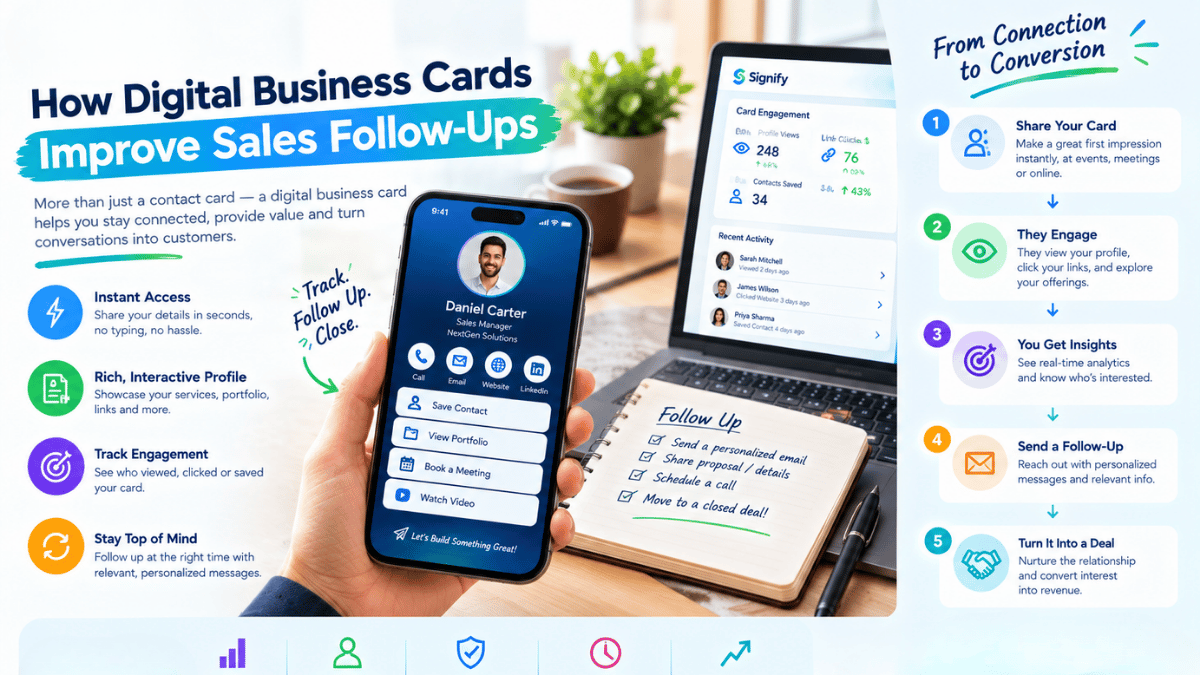
Some digital business card platforms offer analytics that provide insight into how profiles are being used.
However, analytics should be interpreted carefully. A profile view does not automatically mean purchasing intent. A link click does not guarantee a sales opportunity.
Analytics are best understood as signals that can provide context around digital engagement.
What Makes a Digital Business Card Effective?
Simply creating a digital card does not guarantee better networking. The quality of the experience matters.
Avoid Turning Your Digital Card Into a Website
A digital business card should remain focused. More information is not always better.
If the visitor has to scroll through an enormous amount of content before finding the contact button, the experience becomes less effective.
What does someone need to know about me?
What action do I want them to take?
Which links genuinely help them?
A focused profile is usually easier to use than an overloaded one.
Digital Business Cards and Mobile-First Networking
Networking has become increasingly mobile.
That makes mobile usability essential. A digital business card should be designed for the screen where it will most commonly be viewed.
Large buttons, clear information, fast access, and straightforward navigation can make the experience easier.
QR Codes: The Bridge Between Physical and Digital Networking
QR Codes
Digital business cards do not eliminate physical networking. They can enhance it.
You can display your QR code on:
- Business cards
- Conference badges
- Booths
- Presentations
- Brochures
- Posters
- Name tags
- Signage
Digital Business Cards and NFC
NFC provides another method for contactless sharing.
Compatible NFC-enabled cards or devices can direct someone toward a digital profile through a simple interaction.
The physical object becomes the access point.
The digital profile becomes the destination.
Does a Digital Business Card Really Get More Responses?
This is where it is important to separate engagement from guaranteed outcomes.
There is no universal statistic proving that every digital business card will receive more responses than every email or printed card.
A digital card is a tool. It does not replace relationship building. What it can do is make it easier for people to access your information and take the next step.
The Real Advantage: Fewer Barriers to Connection
They make professional information easier to access.
A person does not need to:
- Type your phone number
- Manually enter your email
- Search for your website
- Search for your LinkedIn profile
- Ask you to send another message
The information can be available in one place.
In a world where professionals already have more notifications, messages, meetings, and information than ever before, reducing unnecessary effort can make a meaningful difference.
A Better Networking Journey
The technology does not create the relationship. It makes the path between the introduction and the relationship easier to navigate.
Why Signify Is Built for Modern Networking
Signify is a platform for creating and sharing digital business cards.
Instead of treating a business card as a static piece of printed information, Signify provides a digital environment where professionals can present their identity and make relevant information accessible from one place.
Professionals can use their digital profile to share contact information and connect visitors with the websites, social profiles, and professional resources that matter to them.
For individuals, Signify can support personal professional branding. For companies, it can help create a consistent digital identity across teams. For networking events, it provides a convenient alternative to exchanging only physical cards.
Digital Business Cards Are Not About Replacing Human Connection
Technology should support relationships, not replace them.
The conversation creates the connection.
The digital profile helps maintain it.
Frequently Asked Questions About Digital Business Cards
A digital business card is an online professional profile containing contact information, professional details, links, social profiles, and other relevant resources.
They can be more flexible because they are updateable, interactive, and easy to share digitally. Paper cards can still be useful, but digital cards provide additional functionality.
Usually, it should not be considered a full replacement for a website. A digital business card works best as a professional identity and contact-sharing hub that connects visitors to your website and other resources.
Depending on the platform, you can share a digital business card using a link, QR code, NFC-enabled method, email, messaging, social media, or other digital channels.
Yes. Adding professional social profiles such as LinkedIn can make it easier for people you meet to continue the relationship online.
Yes. Organizations can provide employees with digital profiles while maintaining consistent company branding and professional information.
Yes. A major advantage of digital cards is that information can be updated without reprinting physical cards.
No. No networking tool can guarantee a response. Digital business cards can reduce friction and make contact information easier to access, but engagement depends on the relationship, context, profile quality, timing, and follow-up.
The Future of Professional Contact Sharing
The business card is not disappearing. It is evolving.
The basic purpose remains the same: Help people stay connected.
Digital business cards fit naturally into a world where smartphones, QR codes, social networks, websites, and digital communication already shape professional relationships.
From Static Cards to Active Connections
The biggest change is not the disappearance of paper. It is the evolution from static information to interactive identity.
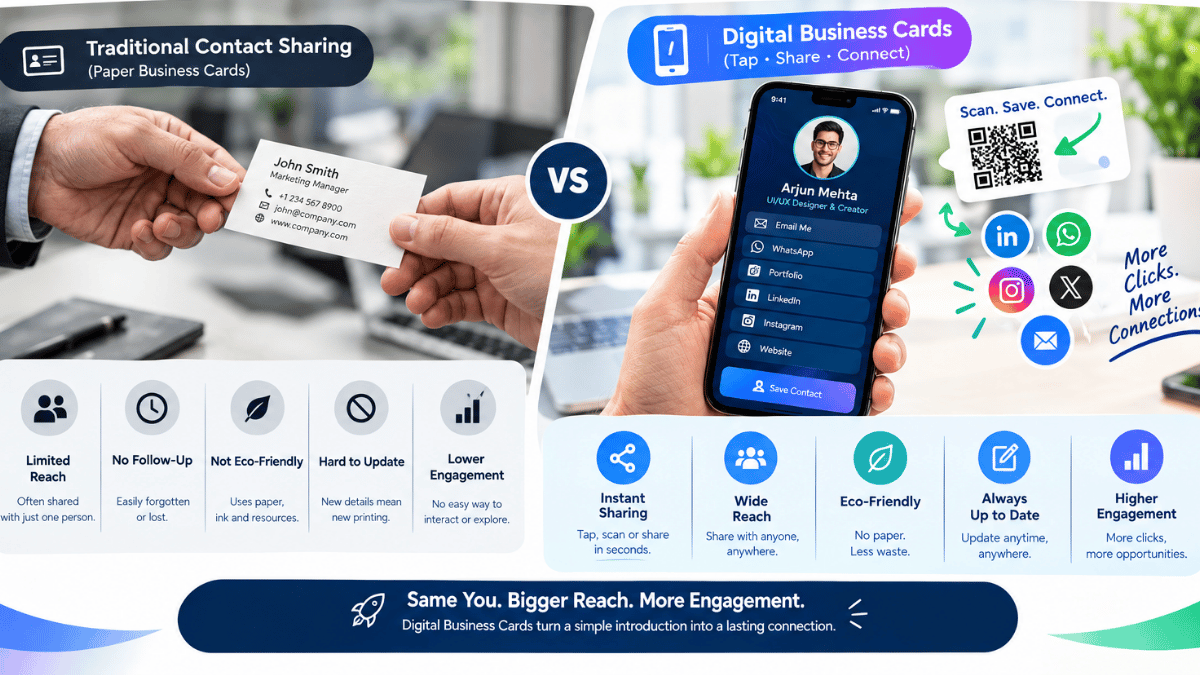
Traditional Card
Here is how to reach me.
Digital Business Card
Here is who I am, what I do, how you can reach me, where you can learn more, and what you can do next.
That is a fundamentally different networking experience. And it is one that fits the way modern professionals communicate.
Make Every Introduction Easier to Continue
Every professional introduction represents an opportunity. But the opportunity can disappear if staying connected is difficult.
A digital business card can make that next step simpler.
Meet someone. Share your profile. Let them choose how they want to connect. Give them access to your professional identity. Make your information easy to save. Keep it current. And continue the relationship beyond the initial conversation.
With Signify, your business card becomes more than contact information. It becomes a digital starting point for professional relationships.
The Simpler Networking Journey
People are not necessarily looking for more information. They are looking for easier access to the right information.
Instead of giving someone a static card and expecting them to take several steps afterward, you can provide a digital profile that brings your professional identity, contact information, website, social profiles, portfolio, and next actions together.
Traditional Journey
Meet → Paper Card → Search → Type → Save → Follow Up
Digital Journey
Meet → Share → Connect
That is the real value of a digital business card.
It does not replace conversation. It does not guarantee a sale. It does not make relationship building automatic. It simply makes it easier for a good introduction to become an ongoing professional connection.
Connect smarter. Share digitally. Stay connected with Signify.