Go Digital.
Stay Connected.
How digital business cards support more flexible, paper-conscious professional networking without removing the human side of business.
Less Physical Dependence
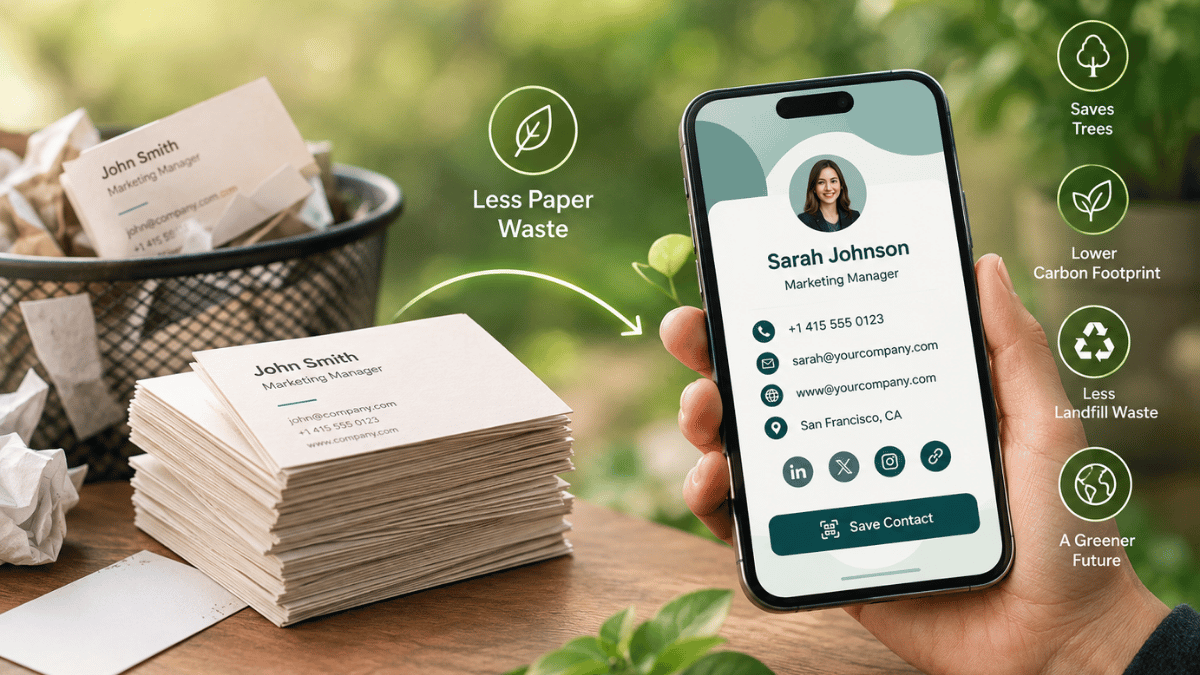
Digital contact sharing can reduce the need for repeatedly printing, transporting, replacing, and disposing of paper cards.
More Than Contact Details
A digital profile can connect contacts with websites, portfolios, social profiles, services, scheduling, and other resources.
Networking is changing
The traditional business card is evolving as businesses move toward digital workflows, paperless communication, remote collaboration, digital marketing, and cloud-based tools.
The familiar paper card
Professionals have exchanged printed contact information at conferences, trade shows, meetings, exhibitions, client visits, business events, and everyday conversations for decades.
The digital alternative
A digital business card provides a modern way to share professional information without relying entirely on printed materials.
The sustainability connection
Digital contact sharing can help reduce repeated printing, transportation, and disposal of physical cards.
A realistic approach
Digital technology still requires servers, networks, electricity, devices, and infrastructure. The goal is not zero impact, but reducing unnecessary physical waste where possible.
The hidden environmental cost
A single card may appear insignificant, but sustainability is often about the cumulative resources used at scale.
It is about scale.
Companies print cards for employees, sales representatives, executives, rebrands, role changes, and networking events. Large conferences can involve thousands of attendees exchanging printed cards.
Material lifecycle
Printed cards involve production, finishing, packaging, transportation, distribution, and eventual disposal.
The real question
The environmental question is less about one piece of paper and more about cumulative resource consumption.
From raw material to disposal
Materials
Production
Wood or recycled fiber may form part of the paper supply chain.
Water and energy are involved in material and manufacturing processes.
Printing materials, packaging, and manufacturing infrastructure add resource demands.
Transportation and distribution extend the physical lifecycle of the card.
Outdated cards become waste
Obsolescence is one of the most overlooked forms of business-card waste.
Your information changes.
Your printed card does not. A change in role, phone number, office, website, email, company name, or brand identity can make an existing batch less useful.
A profile that can change
Digital business cards approach the problem differently. Instead of printing new cards whenever information changes, the digital profile can be updated while the same link or QR code continues directing people to current information.
Can we reduce resources
without reducing connection?
Sustainable networking does not mean eliminating physical interactions. Conferences, meetings, exhibitions, client visits, and face-to-face conversations remain important.
Small changes can add up
Share contact information digitally?
Use a digital business card instead of automatically printing cards.
Present portfolios online?
Provide digital access instead of printing large collections of work.
Distribute documents electronically?
Use digital resources whenever physical copies do not add value.
Connect physical experiences?
Use QR codes to connect printed materials with digital information.
Avoid outdated materials?
Use updateable digital destinations instead of repeatedly replacing information.
Use fewer event materials?
Move schedules, presentations, resources, and other information online.
Paper vs. digital networking
Sustainability is only one part of the difference. Digital cards can also improve flexibility, information management, branding, accessibility, and convenience.
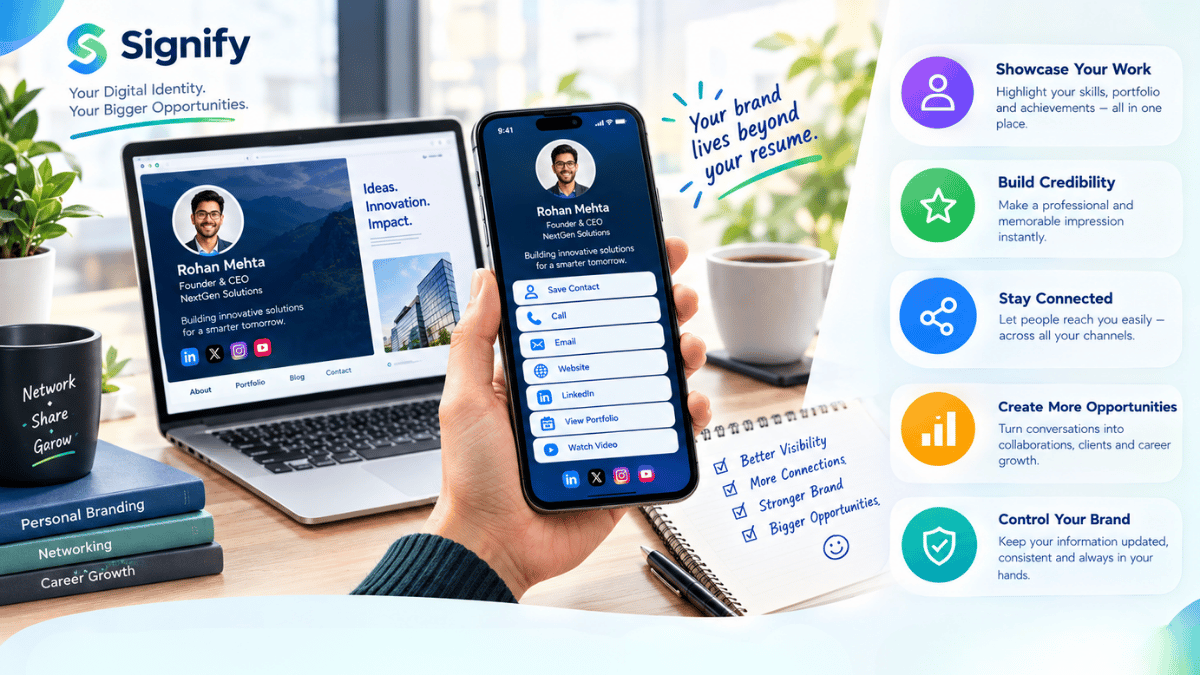
One card. More professional context.
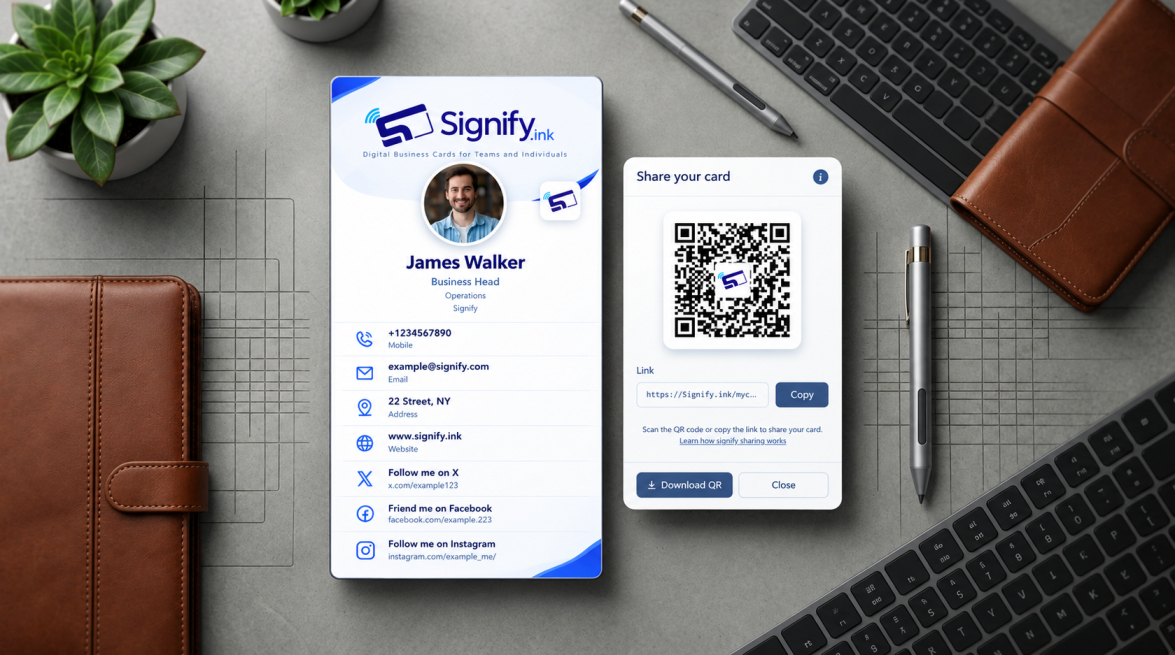
A digital business card can turn a simple contact exchange into a connected professional experience.
A digital profile can connect your identity to more resources.
Instead of squeezing additional information onto a small printed card, digital networking can provide access to useful resources through one profile.
Traditional card
Name, job title, company, phone, email, and website are typically limited by the physical space available.
Digital experience
The profile can connect recipients with websites, products, services, portfolios, booking, videos, and more.
QR codes make paperless networking practical
Scan. Connect. Continue.
Display a QR code during a conversation. The other person scans it, opens the digital business card, saves the contact information, and explores the available links.
Turn physical events into digital connections
Conferences and trade shows can involve business cards, brochures, flyers, catalogs, product sheets, and other short-lived printed materials.
Scan instead of hand over
Exhibitors can invite visitors to scan a QR code and access a digital profile instead of automatically exchanging cards.
Connect more resources
The profile can lead visitors to company websites, product information, service pages, case studies, and contact details.
Keep the relationship moving
Digital links can lead to sales representatives, meeting booking, social profiles, and additional business resources.
Digital does not mean virtual-only
Digital business cards do not require professionals to stop attending events or meeting clients in person.
The interaction remains human
You can have a face-to-face conversation and use a digital tool to exchange information. The interaction remains human; the contact exchange becomes digital.
Less paper does not mean less professionalism
Professionalism comes from the quality of the interaction, presentation, accuracy, and experience—not simply the material used to exchange contact details.
Consistent branding and professional photography.
Clear typography and accurate contact information.
Company details, relevant links, and professional social profiles.
Portfolio content and easy contact options in one experience.
Keep professional information updateable
New Website?
Update the digital profile instead of replacing printed cards.
New Job Title?
Change the information inside the digital profile.
New Social Channel?
Add the new link without producing another physical batch.
New Service?
Add the relevant information to the same professional destination.
Build a broader paper-reduction workflow
A digital business card works best when it becomes part of a larger digital-first business practice.
Digital Brochures
Provide digital versions and print only where physical copies genuinely add value.
Online Portfolios
Share portfolios through websites rather than printing large collections of work.
Digital Proposals
Distribute proposals electronically and connect supporting resources.
Digital Signatures
Include contact details, websites, profiles, and digital cards.
Online Scheduling
Provide a direct path to the next interaction with meeting links.
Digital Event Materials
Provide schedules, maps, speaker information, and resources digitally.
For Sales Teams
Digital business cards can provide every salesperson with a consistent professional identity while reducing dependence on large quantities of printed cards.
For Large Organizations
Centralized digital business card management can support consistent employee identities, faster updates, onboarding, and reduced printing dependency as organizations grow.
Digital networking and the circular economy
Digital networking can be viewed through the broader lens of resource efficiency, reuse, reduction, and responsible management.
Disposable information carrier
A printed business card is generally designed for exchanging and retaining contact information. Once the information is outdated, its practical value can become limited.
Updateable digital information
A digital profile can remain useful while information changes, making digital information more adaptable without claiming that digital technology is environmentally neutral.
Think Digital First
Instead of automatically producing physical materials, organizations can question whether those materials need to be printed at all. Repeated across teams and years, small decisions can become meaningful operational improvements.
8 ways to make networking more sustainable
Use a Digital Business Card
Create a professional digital profile as a primary contact-sharing method.
Reduce Printing
Consider whether cards, brochures, and flyers need to be produced in large quantities.
Use QR Codes
Connect physical materials with digital destinations.
Share Portfolios Digitally
Use online portfolios instead of printing large collections of work.
Use Digital Event Materials
Access schedules, presentations, speaker information, and resources digitally.
Keep Information Updateable
Use digital destinations that can change instead of repeatedly replacing printed materials.
Choose Better Materials
When printing is necessary, consider recycled or responsibly sourced materials and suitable quantities.
Measure First
Track actual printing and material use before making sustainability claims.
One connection can lead anywhere
A digital business card can bring several next steps together in one accessible professional profile.
Save your number.
Email you directly.
Visit your website.
Connect on LinkedIn.
View your portfolio.
Schedule a meeting.
Learn about your company.
Continue the relationship digitally.
Physical meetings. Digital information flow.
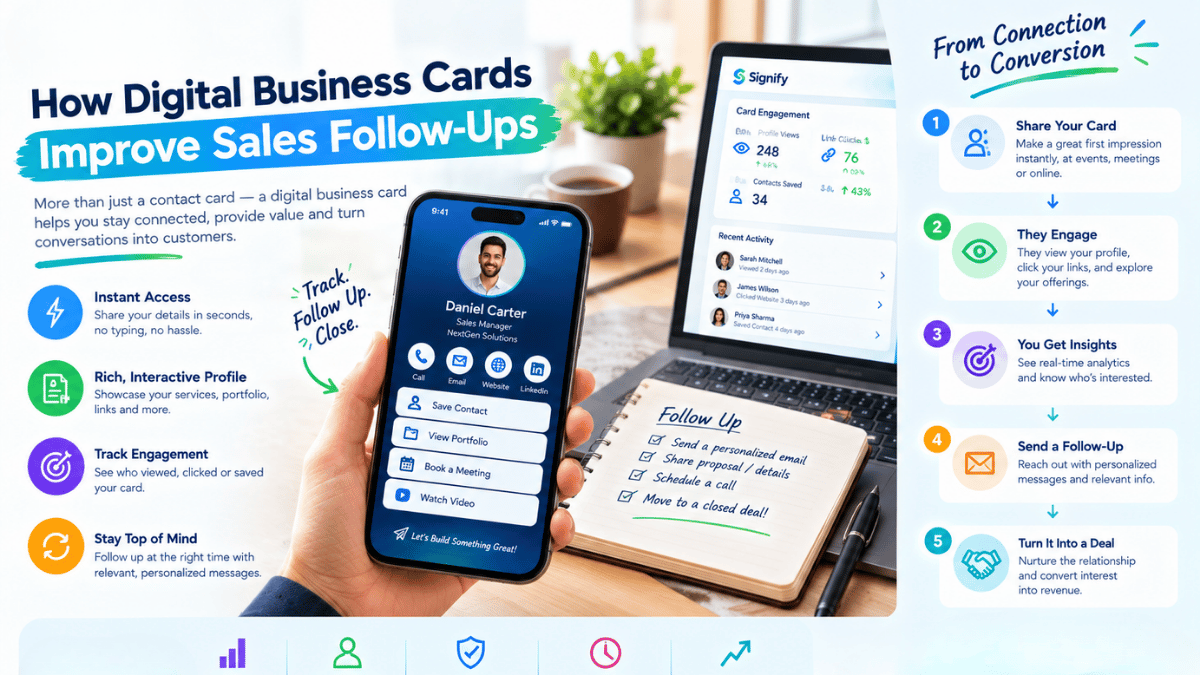
Meet
Start with a face-to-face conversation at a conference or meeting.
Scan
Use a QR code to facilitate the contact exchange.
Connect
Use the digital business card to provide professional information.
Continue
Move the relationship forward through LinkedIn, websites, calls, and digital documents.
Questions about eco-friendly digital cards
Are digital business cards better for the environment?
They can reduce the need for printed cards and physical waste, but digital services also consume energy and rely on electronic infrastructure.
Do digital business cards use paper?
The digital business card itself does not require a printed card and can be shared through a link, QR code, or compatible contactless technology.
Can I use a QR code instead?
Yes. A QR code can direct someone to your digital business card so they can access professional information from a smartphone.
What happens when information changes?
The digital profile can generally be updated without discarding existing physical cards.
Are digital business cards suitable for companies?
Yes. They can be used by sales teams, executives, recruiters, consultants, employees, and other professionals.
Are they completely paperless?
The digital card itself can be paperless, although organizations may still use physical materials where appropriate.
Can they reduce business waste?
They can reduce repeated printing of disposable contact cards. The overall benefit depends on how much physical printing is actually avoided.
Is digital networking zero-impact?
No. Digital infrastructure consumes energy and requires devices, networks, servers, and supporting infrastructure.
Go digital. Stay connected. Use less paper.
Signify is built around digital business cards, helping professionals create and share a digital version of their professional identity without relying entirely on traditional paper cards.
The business card is small. The workflow behind it is much bigger.
Digital business cards can reduce dependence on printed cards, eliminate the need to reprint information whenever details change, connect physical networking with digital experiences, and give professionals a richer way to present their identity.
They are not a complete sustainability solution and do not eliminate the environmental impact of digital technology.
But they can be a sensible part of a broader strategy to reduce unnecessary paper consumption and move professional communication toward flexible digital workflows.
Go digital. Stay connected. And make every professional introduction count.
Meet in person.
Connect digitally.
Sustainable networking is not about removing the human element from business. It is about removing unnecessary friction and unnecessary physical waste.