
Digital Business Cards for University Students: Building Your Professional Network Before Graduation
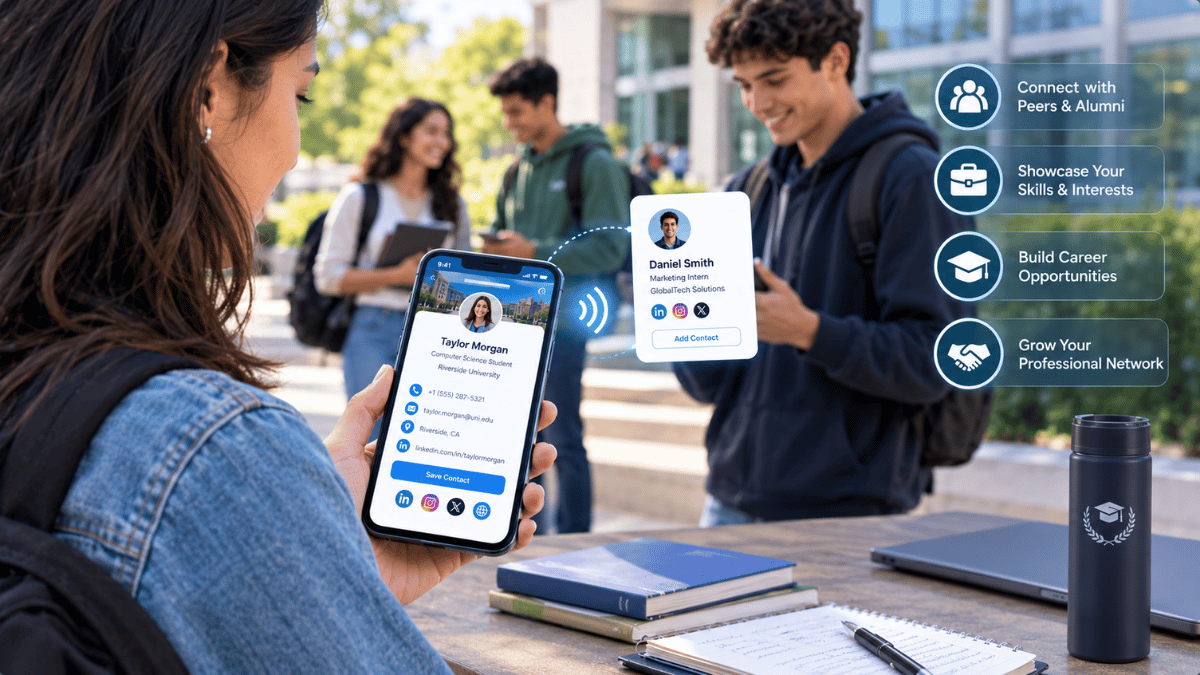
Professional connections can begin long before the first full-time job. A student digital business card creates one convenient place to share academic interests, projects, skills, and contact details while building relationships throughout university.
Networking Starts Before Your First Job
Students do not need to wait until they enter the workforce to build professional relationships. University projects, internships, career fairs, workshops, and alumni events offer opportunities to meet employers and industry professionals.
Sharing a clear professional profile can help students introduce themselves, explain their interests, and make it easier to continue a useful conversation after an event.
Why Students Benefit From a Digital Professional Profile
A centralized profile can help students share their academic interests, projects, skills, portfolios, and contact details without preparing a full website before they are ready.
One link. A clearer introduction.
Bring your most relevant information together so employers, mentors, classmates, and collaborators can understand what you are interested in and how to contact you.
-
01
Name and Area of Study Make your identity and academic focus clear.
-
02
Career Interests Highlight the industries, roles, or subjects you want to explore.
-
03
Relevant Projects Show selected coursework, research, and collaborative work.
-
04
Portfolio or GitHub Profile Include a relevant work sample or code repository where appropriate.
-
05
LinkedIn Profile Connect visitors to your professional profile.
-
06
Professional Email Address Offer a suitable channel for academic and career-related messages.
-
07
Résumé or Personal Website Give visitors another way to review your experience and work.
Use Cases Across Campus
Students can use a digital business card in formal career settings and everyday university activities where meeting people may lead to future collaboration.
Career Fairs
Share your profile with recruiters and make it easier to revisit your skills and projects after the event.
Student Conferences
Connect with presenters, researchers, and students who share your academic interests.
Internship Interviews
Provide relevant project links and professional contact details when appropriate during follow-up conversations.
Alumni Networking
Introduce yourself to graduates and continue conversations about career paths, industries, and professional development.
Entrepreneurship Clubs
Share ideas, relevant skills, and project details with potential teammates, mentors, and collaborators.
Collaborative Projects
Make it easier for teammates to find your portfolio, preferred professional contact channel, and areas of interest.
Present Experience Honestly
A strong student profile does not require an extensive employment history. Academic projects, volunteer work, certifications, and personal projects can all demonstrate learning and initiative when described accurately.
Be clear about what you did, what you learned, and whether a project was academic, personal, or completed for an employer. Share only the personal information needed for professional networking.
Keep the Profile Relevant as Your Career Develops
Your digital card should grow alongside your experience. Review it regularly so it reflects your latest work, skills, and professional direction.
After an Internship
Add relevant experience and explain the skills you developed, while respecting any confidentiality requirements.
After a New Project
Include a suitable project link, portfolio item, or repository that demonstrates your contribution.
When Goals Change
Update your career interests, relevant skills, and links as you discover new opportunities or specializations.