Chapter 01
The Invisible Layer of Networking
What happens between your interaction and the internet's action? A journey of light, logic, and invisible infrastructure.
You tap a screen. You press 'Enter'. Within hundreds of milliseconds—often before your finger has fully lifted from the glass—a vibrant, complex interface renders before your eyes. To the modern human, this feels like magic. It is the defining illusion of our era: the illusion of immediacy.
But beneath this glassy surface lies an industrial complex of staggering scale. A single click initiates a cascade of digital diplomacy, physical traversal, cryptographic handshakes, and algorithmic routing that spans continents and ocean floors. This is the Invisible Layer.
This manifesto, spanning comprehensive technical depth, is designed to unpack the exact sequence of events that occur in the milliseconds between interaction and action. We will journey from the microscopic transitors in your device, out through the localized radio waves, down into the deep-sea fiber optic cables wrapped in steel and polyethylene, and into the hyperscale datacenters that form the brain of the modern world.
Interactive Perspective: The Speed of Light vs. The Speed of Internet
Theoretical physics limits how fast information can travel. Infrastructure limits how fast it actually does. Click to simulate a packet traveling from New York to London (approx. 5,500 km).
Estimated Latency
0 ms
Chapter 02
The First Millisecond: DNS and the Global Directory
Before your computer can speak to a server, it must know its name. Humans understand words like signify.ink. Machines only understand numbers like 104.21.75.120. The translation between the two is handled by the Domain Name System (DNS), the largest distributed database on Earth.
The Recursive Journey
When you type a URL, your browser checks its local cache. If empty, it asks the Operating System. If empty, it queries a Recursive Resolver (usually run by your ISP or a public provider like Cloudflare's 1.1.1.1). If the resolver doesn't know, it embarks on a hierarchical hunt:
- Root Nameservers: The 13 logical servers that know where the Top-Level Domains (.com, .org, .ink) are located.
- TLD Nameservers: The servers managing a specific extension. They know which authoritative server holds the specific domain.
- Authoritative Nameservers: The final stop. This server holds the actual A Record (IPv4) or AAAA Record (IPv6) mapping the name to the IP.
Chapter 03
Establishing Trust: The TCP & TLS Handshakes
Knowing the address is not enough. Before data can flow, a connection must be established, and trust must be cryptographically verified. For decades, this has been a multi-step conversation involving TCP (Transmission Control Protocol) and TLS (Transport Layer Security).
Latency Breakdown of Connection Establishment
Comparing connection overhead across network types. Notice how TLS/TCP handshakes penalize high-latency mobile networks.
1. The TCP 3-Way Handshake
TCP guarantees reliable delivery. It ensures packets arrive in order and requests retransmission of lost packets. To start, it requires three trips:
- Client -> SYN (Synchronize)
- <- Server SYN-ACK (Acknowledge)
- Client -> ACK (Connection Open)
2. The TLS Cryptographic Handshake
Once TCP connects, TLS secures it. TLS 1.2 took multiple round trips. TLS 1.3 optimized this drastically to a single round trip (1-RTT), or even 0-RTT for returning visitors.
- Client -> ClientHello (Ciphers supported)
- <- Server ServerHello (Certificate & Key Share)
- Client -> Finished (Encrypted Data begins)
Chapter 04
The Physical Realm: Glass, Steel, and Ocean Trenches
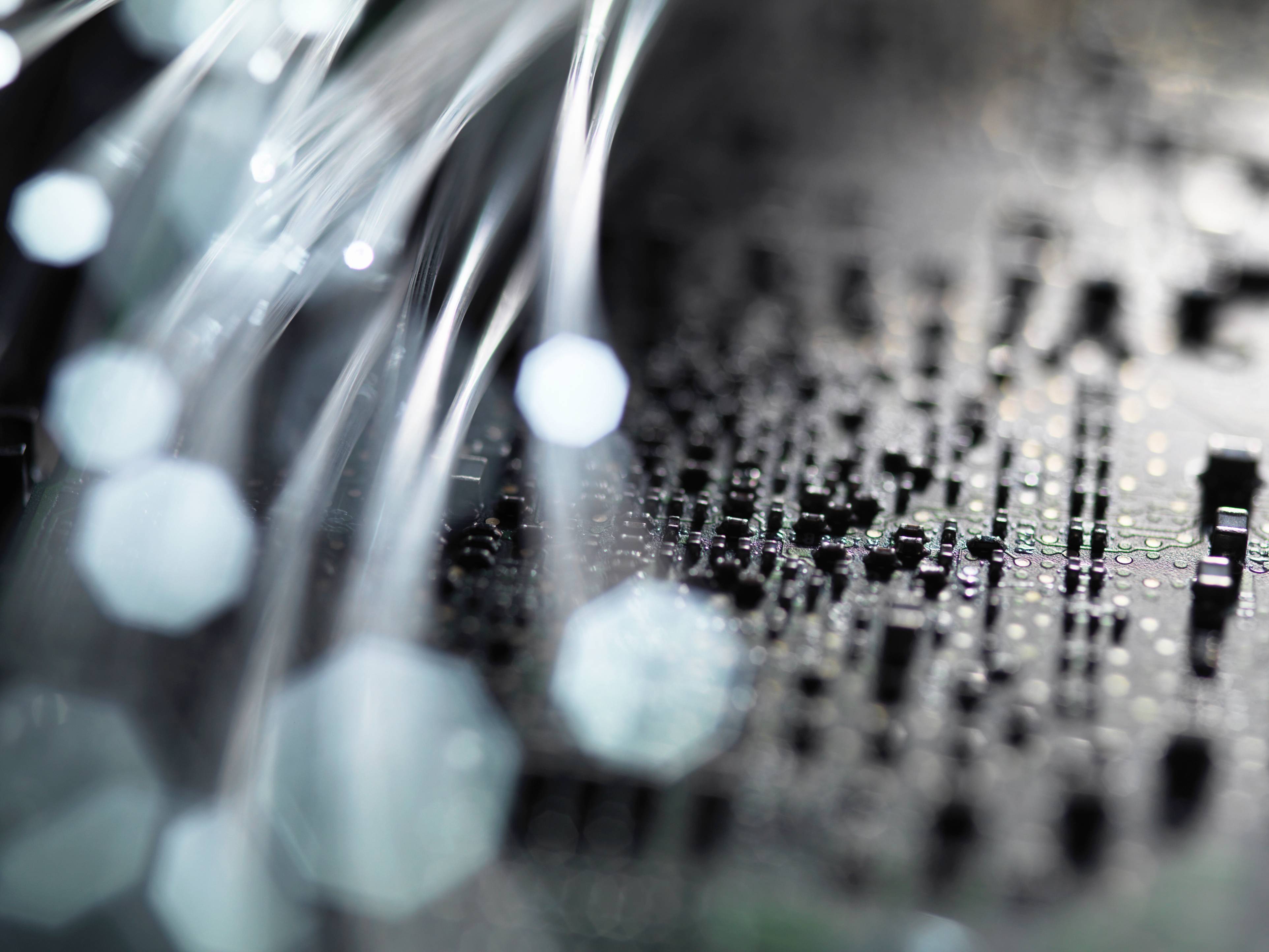
"The Cloud" is a terrible metaphor. The internet is intensely physical. It is made of glass tubes the width of a human hair, resting on the silty bottom of the Mariana Trench, encased in layers of polyurethane and steel armor to protect against shark bites and fishing trawlers.
Global Submarine Cable Capacity Growth (Tbps)
Over 99% of international data traffic travels via submarine cables, not satellites.
When data leaves your ISP, it hits a massive router. This router uses BGP routing tables to find the fastest path to the destination. If the server is on another continent, the data is converted from electrical signals into light.
Through Dense Wavelength Division Multiplexing (DWDM), lasers pulse at billions of times per second. By using slightly different colors (wavelengths) of light, multiple data streams can travel down the exact same strand of glass simultaneously without interfering with each other. This is how a single modern subsea cable can carry over 200 Terabits per second.
⚡ The Amplification Problem
Light fades. Even in the purest glass ever manufactured, optical signals degrade over distance due to scattering and absorption. To cross the Atlantic Ocean (approx. 6,000 km), a signal needs help.
Every 50 to 100 kilometers along the ocean floor, Erbium-Doped Fiber Amplifiers (EDFAs) are spliced into the cable. These massive, pressurized cylinders contain fiber doped with the rare-earth element Erbium. When a "pump laser" excites the Erbium ions, they release energy that perfectly amplifies the passing data signal—amplifying the light with light, without ever converting it back to an electrical signal. This requires constant power, pushed from the landing stations on the coast at up to 10,000 volts.
Chapter 05
The Edge: Cheating the Speed of Light
Because we cannot make light travel faster than 299,792 km/s, the only way to reduce latency is to move the data physically closer to the user. Enter the Content Delivery Network (CDN) and the concept of "The Edge."
Origin Server
The central database and application logic. Usually located in one or two specific regions (e.g., AWS us-east-1).
Edge Node
Thousands of servers placed inside local ISPs worldwide. They cache static assets (images, JS, CSS) to serve them instantly.
A CDN intercepts the HTTP request. If the user is in Mumbai, and the Origin server is in Virginia, traversing the globe takes ~200ms. But if a CDN Edge Node in Mumbai has a cached copy of the website, it responds in ~15ms.
Modern edge computing goes beyond static caching. Edge Workers allow developers to run JavaScript or WebAssembly directly on the edge node. This means A/B testing, authentication, and personalized content generation happen physically next to the user, completely bypassing the long, fragile journey to the origin.
Chapter 06
The Future: QUIC, HTTP/3, and LEO
The invisible layer is undergoing its most radical transformation in twenty years. The foundational protocols of the web are being replaced, and the physical infrastructure is taking to the sky.
Protocol Efficiency: HTTP/2 vs HTTP/3 (QUIC) under Packet Loss
HTTP/3 solves the "Head-of-line blocking" problem. In HTTP/2 (TCP), if one packet is lost, the entire stream halts. QUIC (UDP) allows independent streams to continue.
HTTP/3 and QUIC: For decades, the web ran on TCP. But TCP was designed for reliability, not speed. HTTP/3 replaces TCP with QUIC, a protocol built on top of UDP. QUIC combines the cryptographic handshake of TLS 1.3 with connection establishment, dropping connection times to zero in many cases. More importantly, it multiplexes data streams independently. On a spotty mobile connection, a lost image packet no longer stops the CSS from loading.
Low Earth Orbit (LEO) Constellations: Projects like Starlink are changing the physical layer. Traditional geostationary satellites sit 35,000 km high, resulting in awful 600ms+ latency. LEO satellites orbit at just 550 km. Because light travels roughly 40% faster through the vacuum of space than it does through glass fiber optics, LEO constellations utilizing laser cross-links could soon offer lower latency for long-distance routing (e.g., London to Tokyo) than terrestrial submarine cables.
The web is not a static document. It is a continuous, living stream of data, constantly optimizing its path of least resistance across the globe. The invisible layer will continue to fade further into the background, operating faster, safer, and closer, maintaining the grand illusion of the instantaneous world.