 Digital Card

For decades, the paper business card was the unquestioned tool of professional introduction. But 2025 has been the year the arithmetic stopped working. An estimated 10 billion paper business cards are printed annually, and roughly 88% are discarded within a week. Fewer than one in ten ever makes it into a CRM. A Signify digital business card replaces that broken equation with a live, shareable profile — one that updates automatically, captures leads at the point of contact, and works via NFC tap, Smart QR code, or link. This guide compares the two formats honestly: where paper still wins, where digital dominates, and why 2025 is the tipping point for most professionals and organizations.
This is not a design debate. It is an operational one. Paper cards and digital cards solve the same problem — “how do I leave a lasting trace of myself with someone I just met?” — but they solve it with very different mechanics. Paper relies on the recipient preserving an artifact and manually entering data. Digital relies on the recipient opening a browser and saving a profile. The first is a lottery ticket; the second is a system. Which one you choose determines the conversion rate of every handshake you make this year.
The quiet inefficiency of paper
Paper cards have an aesthetic appeal that digital cards cannot fully replace — the weight of good stock, the tactile ritual of the exchange, the quiet ceremony of receiving something from someone’s hand. That appeal is real, and it is also why the industry has been so slow to admit the underlying math is bad.
The numbers tell a simpler story. Each year, businesses print roughly 10 billion paper business cards worldwide. Approximately 88% are thrown away within a week. Fewer than one in ten ever makes it into a CRM system — meaning the primary goal of networking (capturing a contact) fails at the first hurdle for over 90% of exchanges.
This is not a consumer problem. It is a professional infrastructure problem. A marketing team that invests in a conference booth, a sales team that flies to a trade show, an executive who spends months building a referral network — all of them are dependent on a tool that fails four times out of five. The card is not the main event, but it is the point where the entire investment either converts into a tracked contact or disappears.
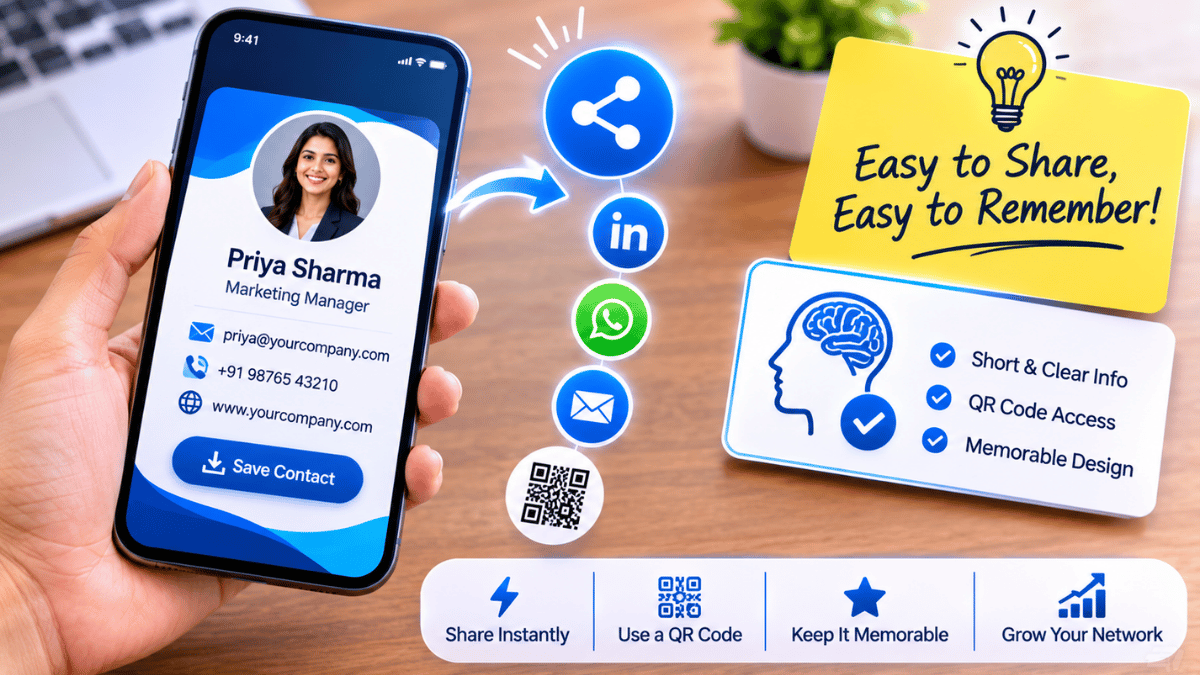
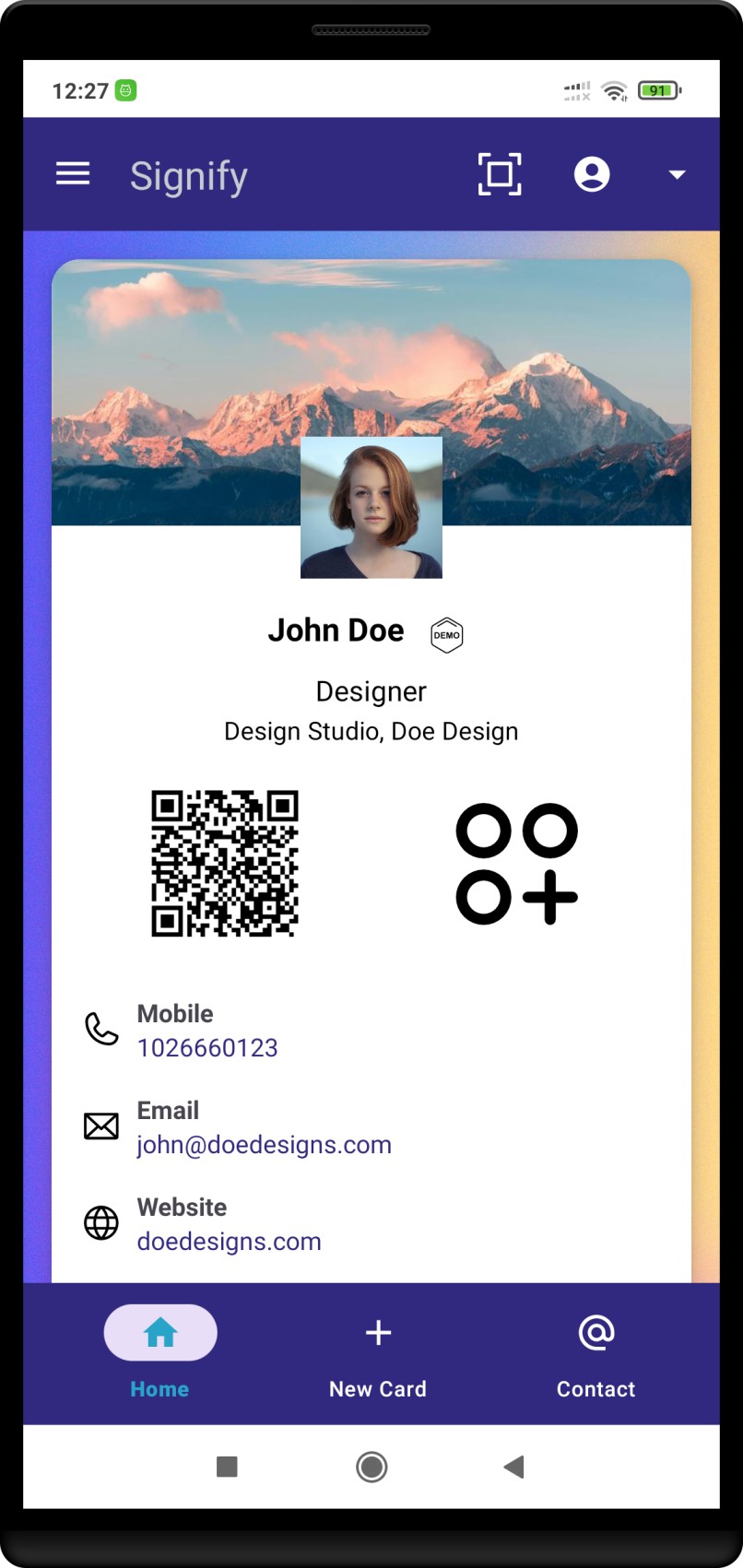
A Signify digital business card changes the mechanics of that moment. The recipient saves the contact with one tap, the profile updates automatically when details change, and the lead routes into the CRM without manual entry. The paper card was never designed for that workflow; the digital card is designed around it.
The environmental case
Paper cards carry a hidden environmental cost that rarely appears in the conversation about networking ROI. Producing 10 billion cards annually consumes an estimated 7.2 million trees, along with the water, energy, and chemical processing required for pulp, paper, ink, and shipping. Because 88% are discarded within a week, the vast majority of that resource consumption produces no lasting connection.
For organizations with sustainability mandates or ESG reporting requirements, replacing paper cards is a low-effort, high-visibility win. It removes a recurring waste stream, reduces procurement spend, and gives employees a tangible way to participate in environmental goals. Unlike many sustainability initiatives, this one requires no infrastructure change — it is a card-format swap that employees can adopt in minutes.
A Signify virtual business card eliminates the print cycle entirely. Signify’s Smart QR & NFC guide estimates that a single digital card replaces roughly 1,500 paper cards per employee per year — meaning a 100-person team removes about 150,000 cards from circulation annually, along with the associated carbon and waste. For organizations in regulated industries or public-facing sectors, that is a defensible line item in an annual sustainability report.
The environmental argument is not the strongest argument for switching — conversion and cost usually win that debate. But it is the argument that most reliably converts a sustainability committee into a champion of the change, and in many organizations that is the difference between a pilot and a rollout.
Three catalysts of change
The shift away from paper is not accidental. Three converging forces have made 2025 the year digital cards move from early adoption to default practice.
Catalyst 1: Sustainability as corporate policy
Corporate social responsibility has matured from an annual-report footnote into a core pillar of brand identity and talent acquisition. Millennials and Gen Z — now the majority of the workforce — expect companies to demonstrate authentic environmental commitment, and paper cards have become an obvious target for elimination. Every QR code scanned instead of a card handed out is a small but visible statement about organizational values. In an era of climate accountability, the casual wastefulness of paper cards has shifted from neutral to a liability.
Catalyst 2: Technology inflection
The technology required for digital cards has become universal. The COVID-19 pandemic accelerated public adoption of QR codes from a niche marketing tool to a daily utility — restaurant menus, payments, ticketing, check-in. Simultaneously, NFC chips became a standard feature in mid-range and flagship smartphones, enabling simple tap-to-share functionality without any app download. The infrastructure is no longer a barrier; it is a powerful enabler waiting to be used. A Signify NFC card and a Smart QR code both work on virtually any phone sold in the last five years.
Catalyst 3: The intelligence layer
A paper card is a dead end — a static snapshot of information. A digital card is a gateway. Modern platforms like Signify integrate an intelligence layer that turns networking from a one-time exchange into a managed relationship. Lead capture, analytics, CRM sync, and follow-up automation all happen from the same profile that was shared at the handshake. The card becomes the starting point for a relationship managed with data-driven precision, not just a business card with extra features. The Signify solutions overview shows how these pieces connect for different professional workflows.
The tipping point: where we are in 2025
The adoption curve has crossed a threshold. Digital business card adoption was approximately 2% of professionals in 2016, climbed to 12% by 2020 as the pandemic normalized QR codes, and reached roughly 45–60% by 2024–2025 in professional services, sales, and enterprise contexts. The trajectory is not slowing; it is accelerating as platform integrations mature and organizations standardize.
The practical implication for a professional deciding whether to switch in 2025 is different from a professional deciding the same thing in 2019. In 2019, a digital card was a novelty — impressive, but unusual. In 2025, it is close to expected. A professional who hands over a paper card today is increasingly seen as traditional, not necessarily in a bad way, but distinctly less tech-forward than the alternative.
For organizations, the timing is even clearer. A firm that runs a 50-person sales team can deploy branded Signify Teams cards in days, at a fraction of the annual cost of printing and reprinting paper cards for the same team. The pricing page has current figures; the ROI case is often positive within the first year.
What you actually get from a digital card
The comparison is not “a card vs. a card.” It is “a piece of paper vs. an interactive profile.” That difference shows up in six concrete features, each of which corresponds to a workflow that paper cannot support.
CRM integration
New contacts route directly into your CRM, with context attached. See how Signify leads handles Zoho CRM sync and re-sync on updates.
Actionable analytics
Track who viewed your card, when, and which links they clicked. Networking becomes a measurable activity instead of a vague effort.
Always up to date
Update your role, company, or contact details once, and every saved copy reflects the change. No reprints, no stale information in circulation.
Rich, dynamic content
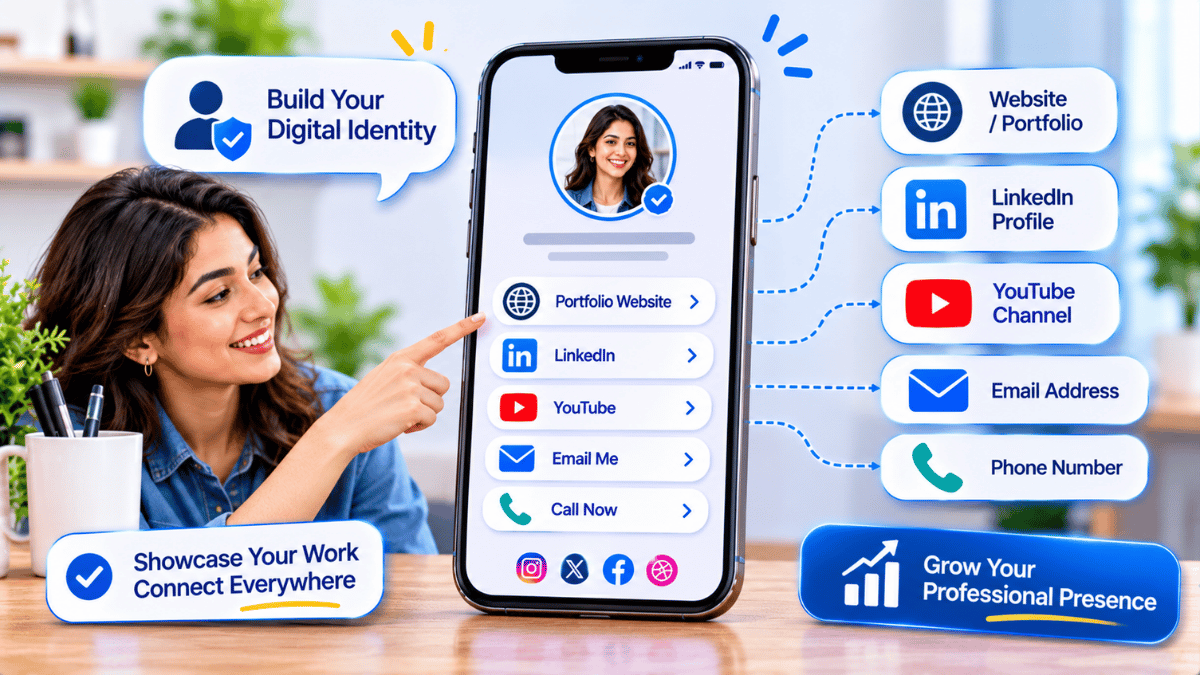
Link to a portfolio, embed a video intro, or add a calendar booking widget — turning your introduction into an interactive experience.
Team-wide brand consistency
Signify Teams enforces branded templates across every employee card, without forcing each person to rebuild their design.
Measurable ROI
Connect a conference handshake to a closed deal by tracking views, saves, and lead conversion. The digital business card page has the analytics overview.
Each of these features corresponds to a real workflow that paper cannot support. CRM sync eliminates manual data entry. Analytics turns networking from an unmeasured activity into a feedback loop. Real-time updates eliminate the reprint cycle. Rich content turns a name and number into a full professional presentation. Team templates solve brand consistency at scale. And ROI tracking proves the value of networking to finance and leadership.
For a professional whose networking is ad hoc, the digital advantage is convenience. For an organization whose networking is a strategic investment, the digital advantage is measurability — the ability to prove which introductions led to revenue, and therefore where to invest further. Paper was never built for that; digital cards were built around it.
Where paper still makes sense
A responsible comparison has to include the cases where paper still wins. There are a few, and they matter for specific professional contexts.
Tactile, high-craft contexts
For professions where the card itself is part of the work — a designer, printer, or letterpress studio — the physical card is a demonstration of craft. A beautifully printed card carries weight, texture, and finish that a digital card cannot replicate. In those contexts, paper is not just a networking tool; it is a portfolio piece.
Certain regulated or offline environments
Some client interactions take place in environments where phones are discouraged, or where handing over a physical card is part of a ritual that carries professional meaning. In those settings, paper still works, and a digital card may not be the first introduction.
Supplementary use, not replacement
The best answer for most professionals is not “paper or digital” — it is both. A Signify NFC card is a physical object that taps to open a digital profile. It preserves the tactile ceremony of the paper exchange while delivering the digital advantages of analytics, real-time updates, and lead capture. Many professionals carry both: an NFC card for in-person introductions, and a Signify email signature for follow-up.
Side-by-side comparison
Here is the full comparison across the criteria that matter for a professional or organizational decision.
| Criteria | Paper card | Signify digital card |
|---|---|---|
| Cost per year (individual) | Recurring print + reprint | Free tier available; paid plans add features |
| Cost per year (50-person team) | High; scales with print and reprints | Per-seat subscription; no reprint cycle |
| Handshake-to-contact conversion | ~12% | ~36% (3X) |
| Environmental footprint | 7.2M trees/year industry-wide | Near zero per card |
| Updates after sharing | Impossible without reprint | Instant, across every shared copy |
| Analytics | None | Views, saves, link clicks |
| CRM integration | Manual entry, high error rate | Automated via Signify leads |
| Content depth | Name, title, phone, email | Unlimited links, video, booking, portfolio |
| Team brand consistency | Hard to enforce without central design | Enforced via Signify Teams templates |
| Tactile experience | High | Medium (paired with NFC card for physical) |
| Security & privacy controls | None | Field-level toggles, 2FA, remote logout |
The verdict
For most professionals in 2025, the answer is not “paper or digital” — it is “digital, with an NFC card as the physical touchpoint.” The paper card is not dead, but its dominant role has shifted. It is now a supplementary object, not the primary tool. The primary tool is the digital profile: the one that updates automatically, captures leads, syncs to CRM, and provides the analytics that prove networking works.
For organizations, the case is even clearer. A sales team, professional services firm, or enterprise that still runs on paper cards is leaving measurable conversion on the table, and is spending money to do it. A Signify Teams rollout solves both problems at once: it eliminates the print cycle and it upgrades every employee’s networking from a static exchange to a measurable interaction.
If you are still deciding, the lowest-risk path is a small pilot. Create a free Signify card, share it at the next three events you attend, and compare your follow-up rate to your paper-card baseline. The math usually settles the question within a month. For organizations, the pricing page has per-seat details, and the Security Policy covers the compliance and data-handling posture that IT and legal will want to review.
Paper is not a bad choice. It is simply no longer the best one for most professional contexts in 2025 — and the gap is widening, not closing. The professionals who switch now are not just choosing a more efficient card; they are choosing to be measurably better at the thing that drives their career: staying in touch.
Frequently asked questions
Is a paper business card still better than a digital one?
For most professional contexts in 2025, no. Digital cards produce roughly 3X higher handshake-to-contact conversion, update automatically, and route contacts into CRM. Paper retains an advantage in tactile, high-craft contexts — for example, a designer or printer whose card is itself a portfolio piece — and as a supplementary object alongside an NFC card.
How much does a paper card cost per year compared to a digital card?
Paper costs vary widely by volume, but the recurring expense is print, reprint, and distribution — and it increases with team size and turnover. Signify offers a free tier for individual professionals, with paid plans adding more cards, custom branding, and team features. The pricing page has current details.
Do digital business cards actually save trees?
Yes. The paper business card industry consumes an estimated 7.2 million trees annually, and approximately 88% of printed cards are discarded within a week. A single Signify virtual card replaces roughly 1,500 paper cards per employee per year — a measurable reduction for teams and organizations.
Do recipients need an app to view my Signify card?
No. Your card opens in a standard web browser on any smartphone, tablet, or computer. There is nothing to download, which matters at in-person networking events where friction kills connections.
What is the conversion rate of digital cards vs paper cards?
Signify’s analysis of face-to-face interactions shows that paper cards convert roughly 12% of handshakes into a CRM contact, while Signify digital cards convert over 36% — a 3X increase. The gain comes from removing manual entry and prompting a two-way exchange at the moment of highest engagement.
Can I update my digital card after sharing it?
Yes. Update the profile once, and everyone who has saved your card sees the latest version when they reopen it. No reprints, no outdated contact details in circulation. That is one of the structural advantages of digital over paper.
Can a paper-based organization transition to digital cards without disruption?
Yes. A typical rollout starts with a pilot of 5–20 employees on Signify Teams, then expands once the team has tested the workflow and analytics. Signify Teams supports seat counts from 5 to 100 and includes a seven-day free trial, so organizations can evaluate the fit before committing.
Does Signify integrate with a CRM?
Yes. Signify leads supports Zoho CRM integration with automated sync and re-sync when contact details change. Contacts can be tagged, annotated, and pushed to the CRM at the point of capture.
Is the digital card secure enough for enterprise use?
Signify encrypts data in transit with TLS 1.2+ and at rest with AES-256, and it hosts on ISO 27001/27017 and SOC 1/2/3 certified infrastructure. Field-level visibility controls and remote logout are supported. The Security Policy documents the controls; enterprise buyers should still conduct their own vendor risk assessment.
What is the first step if I want to try a digital card?
Create a free Signify card, add your details and links, and test the QR code at your next networking event. For teams, start a Signify Teams trial and roll out branded cards across a small pilot group before expanding.
Stop printing. Start connecting.
Replace the paper rectangle with a Signify digital card that updates in real time, captures leads, and proves the ROI of every handshake.
Create your free digital card